MCP Server Integration is Just the Beginning of Intelligent Security

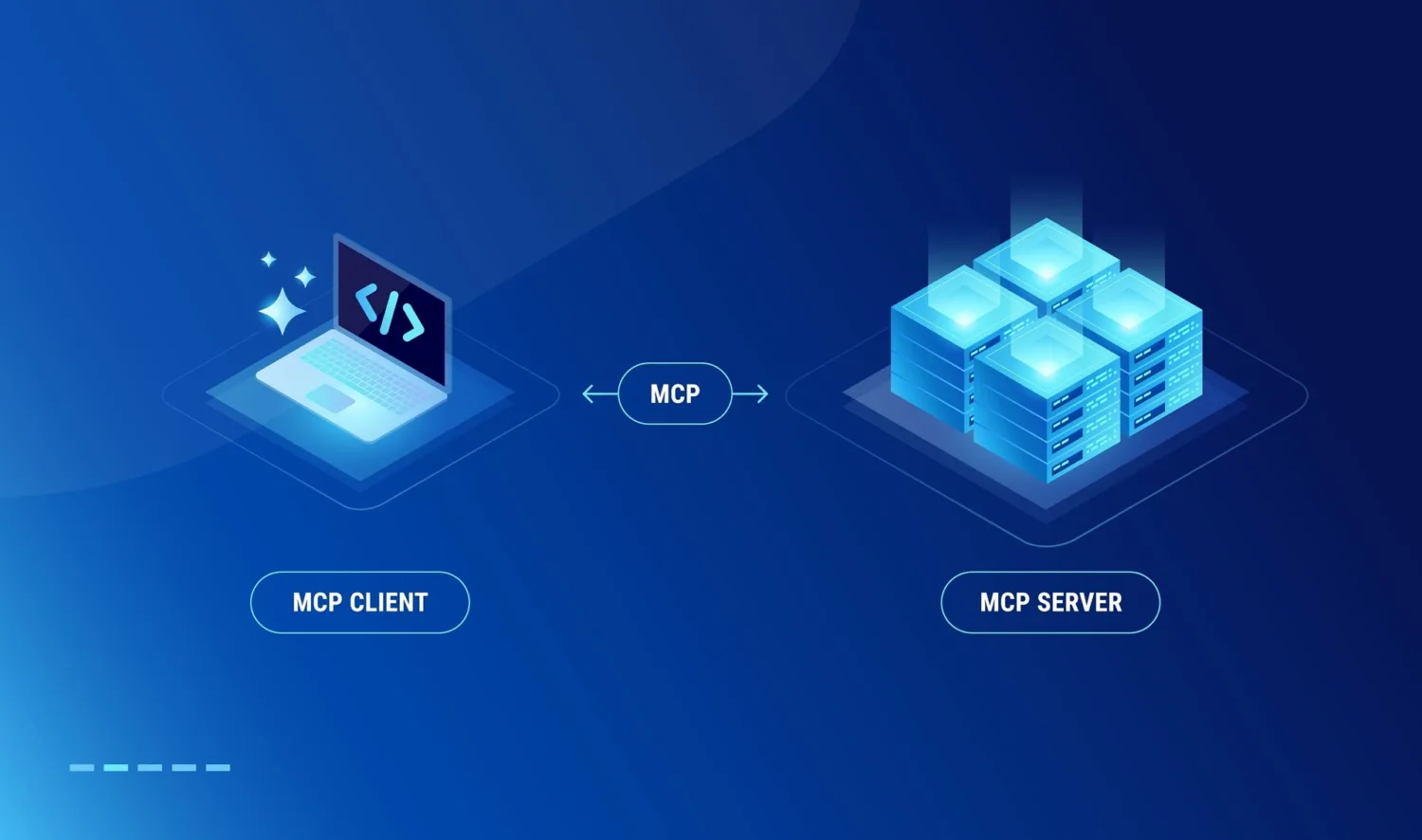
Integrating with an MCP server shifts security intelligence from a gatekeeper to an enabler in your development ecosystem.
Within six months, AI coding assistants and autonomous systems will be querying your security tools thousands of times per day. Every developer using Cursor, Claude, or Copilot, and every CI/CD pipeline making deployment decisions, will access security intelligence by integrating with an MCP server. This is the era of intelligent security orchestration, where security data drives both human and automated decisions. The organizations that prepare for this reality will thrive. Those that don’t will drown in AI-generated vulnerabilities.
This transformation is happening through Model Context Protocol (MCP) servers, based on the open LLM communication standard developed by Anthropic. But MCP isn’t the final security destination; it’s the first step toward something bigger: transforming security from a post-development checkpoint into an intelligent layer that guides both AI code generation and automated security decisions in real time.
Security is becoming intelligence, not a gate.
The Developer Experience Revolution
Developers are rapidly adopting next-generation IDEs like Cursor, Windsurf, and AI-enhanced VS Code. These tools don’t just autocomplete code; they engage in conversations about what to build and how to build it. MCP servers are becoming the critical infrastructure that makes these conversations security-aware.
This is where ArmorCode transforms developer productivity. By integrating with an MCP server, developers get instant security answers without leaving their IDE. Ask “What vulnerabilities exist here?” and get prioritized findings from all your scanners. Ask “How do I fix this?” and get specific remediation for your code. The result: developers ship secure code faster because security intelligence arrives in their natural workflow, not as a separate task.
The ARC Maturity Model: Three Phases of Managing AI-Generated Code Risk
We see the management of AI-generated code and application risks evolving through three distinct phases in what we call the ARC Maturity Model (Alert, Respond, Control):
Phase 1 – Alert-Based Security (Today for most): Traditional tools alert after AI generates code. By the time vulnerabilities are found, developers have already moved on to generating the next thousand lines. Security becomes a bottleneck, not an enabler.
Phase 2 – Intelligent Response (Where ArmorCode is today): by supporting MCP server integration, both AI assistants and autonomous systems query aggregated security intelligence. ArmorCode provides instant, contextualized answers from your entire scanner ecosystem, proven at scale with over 40 billion findings processed and 320+ tool integrations. Developers stay in their flow, and CI/CD makes informed decisions.
Phase 3 – Controlled Generation (Our vision for tomorrow): Security intelligence will guide what AI can generate and what systems can deploy. AI assistants will query security requirements during design, while CI/CD pipelines will enforce policies automatically, preventing vulnerabilities before they exist.
The Pseudo Shift-Left Problem
Here’s what the security industry doesn’t like to admit: we achieved pseudo shift-left. We successfully moved our scanners earlier in the pipeline: PR analysis, build scanning, and even IDE integration. But we left developers and systems stranded without the intelligence to act on what we found.
It’s like giving someone a diagnosis without the cure. We shifted scanning left, but remediation stayed right. Developers got alerts earlier but lacked context to fix them. CI/CD pipelines could fail builds, but couldn’t explain why or how to proceed.
“By 2027, security tools without intelligent interfaces will be obsolete—like paper maps in the age of GPS.”
MCP changes this fundamental equation. Now, security intelligence can actually influence what gets built and deployed, not just evaluate what was built. That’s the difference between pseudo shift-left and true shift-left.
MCP Server Integration: How ArmorCode Expands Your Possibilities
ArmorCode aggregates, correlates, and contextualizes security data from across your entire scanner ecosystem. By integrating with an MCP server, this intelligence becomes accessible to both humans and machines. The use cases this unlocks:
For Developers:
- Query vulnerabilities: “What critical findings exist in the authentication service?”
- Get remediation: “How do I fix this SQL injection vulnerability?”
- Understand posture: “What are the top risks in this repository?”
For Autonomous Systems:
- CI/CD decisions: “Should this build be promoted to production?”
- Policy enforcement: “Does this code meet our security standards?”
- Risk assessment: “What’s the security impact of this deployment?”
This isn’t about replacing scanners. It’s about making their collective intelligence accessible to every decision point in your development pipeline.
Beyond Traditional Integration
IDE integrations and CI/CD plugins have been the traditional approach for improving security integration. But they lock you into specific workflows for specific tools. Want to correlate across scanners? Not possible. Switch IDEs or CI/CD platforms? Start over.
MCP changes this equation entirely. Instead of point-to-point integrations, it enables intelligent interfaces that work across any AI assistant, any IDE, any CI/CD platform, and any workflow. Security intelligence becomes universally accessible, not tool-specific.
This transformation has profound implications. Security teams stop chasing alerts and start providing intelligence that drives decisions. Developers get contextual guidance in their workflow. CI/CD pipelines make security-aware decisions autonomously. The fundamental shift: security moves from blocking to enabling.
The Path to Prevention
We see these vulnerability patterns repeatedly across your organization. Next, we help both AI assistants and automated systems learn from them to prevent their repetition.
This evolution builds on what ArmorCode already does: pattern recognition within your organization’s security data:
- Historical pattern analysis to identify recurring vulnerability types
- Context-aware intelligence that understands which patterns affect which services
- Preventive guidance that helps AI and automation avoid creating issues
Imagine an AI assistant querying: “What security problems commonly occur in authentication modules?” Or a CI/CD pipeline asking: “What deployment patterns have caused production incidents?” ArmorCode responds with specific patterns to avoid, enabling both human and automated decisions that prevent problems.
Measuring Success in the Intelligent Security Era
Traditional metrics don’t capture the value of intelligent security orchestration. Organizations integrating with an MCP server should track:
Decision Velocity: How quickly do developers and systems get actionable security answers? Automation Rate: What percentage of security decisions are handled autonomously? Prevention Metrics: How many vulnerabilities are prevented versus detected?
The pattern is clear: when security becomes intelligent and accessible, both humans and systems engage with it proactively.
The Organizational Impact of Integrating with an MCP Server
If you’re evaluating MCP for your security strategy, understand that it’s not just about the protocol. It’s about the intelligence layer behind it. MCP is the conduit. The value comes from what flows through it.
ArmorCode’s MCP server provides:
- Aggregated intelligence from your entire scanner ecosystem
- Correlation that eliminates duplicate findings and false positives
- Context that enables both human and automated decisions
- Guidance specific to your codebase and policies
Our platform’s maturity, proven through processing over 40 billion findings across 320+ integrations, ensures reliable, scalable intelligence delivery. This first version of our MCP server is just the beginning.
The Next 90 Days: Your Critical Decision Point
Organizations face a choice. Continue treating security as a gate that blocks after problems exist, or embrace intelligent security that guides development and deployment in real-time.
If you’re a security leader: Your scanners will keep scanning, but their value multiplies when both developers and automation can access their intelligence by integrating with MCP servers.
If you’re a development leader: Your teams are adopting AI assistants while your pipelines need smarter automation. MCP makes both security-aware.
If you’re an executive: The organizations winning in the AI era won’t be those with the most scanners. They will be those whose entire development ecosystem, human and automated, operates with embedded security intelligence.
The security industry has a choice: continue building better scanners for a world that needs intelligence, or provide that intelligence where decisions are made. At ArmorCode, we’ve made our choice.
Ready to make your security intelligence accessible? Our comprehensive whitepaper details how ArmorCode’s platform secures AI-generated code at scale, including MCP implementation patterns. Download it here. Or see our MCP server in action. Request a demo to discover how intelligent security transforms your development workflow.