
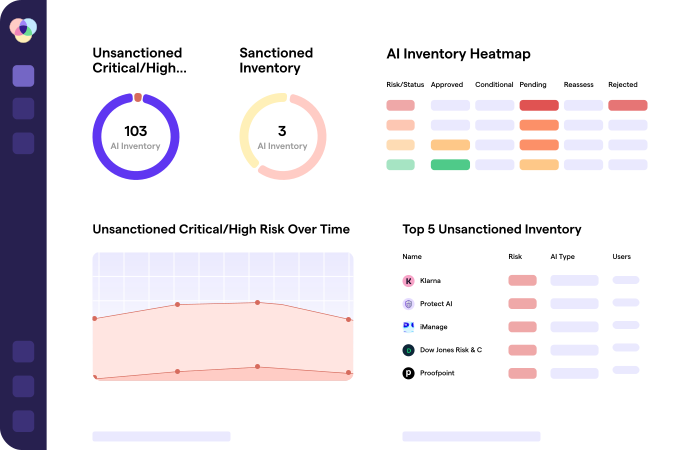
AI is everywhere. Visibility, ownership, and control are not.
Rapid AI adoption is outpacing enterprise governance. Security and risk leaders are left with blind spots, fragmented ownership, and no defensible evidence of control.
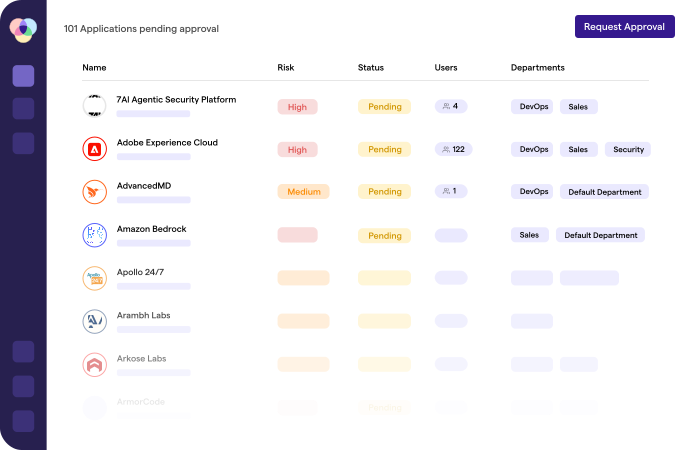
Shadow AI is growing unchecked. Tools, agents, and models sprawl beyond security’s reach.
Ownership is ambiguous. No system defines what’s approved, who owns it, or who’s accountable.
Alert-only tools don’t drive action. Signals without context, ownership, and enforcement leave risks ungoverned.
Audit readiness is a manual fire drill. Proving AI governance requires heroic effort—every time.
Enterprise AI control that keeps pace with AI adoption
ArmorCode AIEM gives CISOs and security leaders the AI security visibility and control needed to govern AI adoption, then connects that activity to ownership, policy, risk, and action. Security teams can govern AI across applications, agents, APIs, code, SaaS, models, and MCP servers without becoming a bottleneck to adoption.
Eliminate Shadow AI
Get unified visibility across apps, agents, APIs, code, SaaS, models, and MCP servers, cutting ungoverned AI assets up to 90% within 90 days.
Establish ownership and accountability
Define what AI is allowed, who owns it, who approved it, and who is accountable, cutting unowned AI assets up to 90% in 90 days.
Convert AI risk signals into action
Maintain auditable records of usage and controls, closing 95%+ of signals to a decision daily and audit evidence in minutes.
Put AI risk in context and turn it into action
AIEM brings AI exposure data into the ArmorCode Context Risk Graph, where it is connected with application, infrastructure, software supply chain, asset, and business context. As part of ArmorCode Unified Exposure Management, AIEM helps teams understand which AI exposures matter, who owns them, and what action should happen next.
Unify AI exposure context
Continuously ingest and normalize AI usage signals from your existing security stack with no tool consolidation or rip-and-replace required.
Automated policy enforcement & controls
ArmorCode identifies high-risk or non-compliant AI usage and automatically triggers policy-driven workflows, approvals, and remediation actions.
Durable, evidence-based governance
Built-in dashboards and on-demand audit reports deliver a continuous, defensible record of AI risk to keep your organization audit-ready.
Customer Testimonials
Trusted by Security Leaders Managing AI Risk at Scale
“Responsible AI requires more than detection; it requires accountability and trust. AI Adoptions are accelerating across the enterprise, often outpacing governance models’ maturity. What’s encouraging is the emergence of platforms like ArmorCode that focus on surfacing accountability for AI activity, assigning ownership, and embedding policy-driven workflows. That’s the direction the industry needs if we are going to enable AI innovation with defensible oversight.”

TRUSTED BY THE WORLD’S TOP BRANDS














Frequently Asked Questions
Q: What is AI Exposure Management (AIEM)?
A: AIEM is ArmorCode’s solution for eliminating shadow AI risk and establishing clear ownership and control over enterprise AI use. It gives security and risk teams unified visibility into AI tools, agents, and models, then converts that visibility into governed, board-ready evidence of AI risk management. AIEM is part of ArmorCode Unified Exposure Management, bringing AI exposure context into the same Context Risk Graph used across application security, infrastructure security, and software supply chain security.
Q: What is Shadow AI?
A: Shadow AI refers to AI tools, agents, and models adopted across an organization without security’s knowledge or approval. It grows unchecked because AI adoption is outpacing enterprise governance, leaving blind spots, fragmented ownership, and no defensible evidence of control.
Q: How does AIEM reduce Shadow AI risk?
A: AIEM delivers unified visibility across applications, agents, APIs, code, SaaS, models, and MCP servers, closing the blind spots that single-layer and siloed tools miss. Enterprises using AIEM cut ungoverned AI assets by up to 90% within the first 90 days.
Q: How does AIEM establish ownership and accountability for AI?
A: AIEM defines what AI is allowed, who owns it, who approved it, and who is accountable for ongoing risk. This removes ambiguity and orphaned AI across the enterprise, cutting unowned AI assets by up to 90% in the same 90-day window.
Q: Does AIEM require replacing our existing security tools?
A: No. AIEM ingests and normalizes AI usage signals from your existing security stack, including SASE, EDR, and firewalls, with no tool consolidation or rip-and-replace required.
Q: How does AIEM support audit and compliance readiness?
A: AIEM maintains auditable records of AI usage, ownership, and controls, so teams can produce defensible evidence of AI risk governance on demand. It closes more than 95% of signals to a governed decision within a day and reduces audit evidence production time to minutes.