AI Finds Risk Faster Than Humans Can Fix It. CTEM’s New Bottleneck

The Discovery Surge: AI Is Changing How Fast Risk Is Found
Frontier AI models are increasing the speed of vulnerability discovery and attack-path analysis. That shortens the time between disclosure and exploitation, and it raises the volume of findings and exposure signals that security teams have to process. If your team is running a Continuous Threat Exposure Management (CTEM) program, you are probably already feeling the effect. Finding risk is getting faster. Fixing it is not.
That gap is where CTEM programs now succeed or stall. CTEM was created to move security away from periodic vulnerability management and toward a continuous operating model, and the case for that shift is stronger now that AI is accelerating the front end of the process. The harder question is what the rest of the program needs to look like when discovery no longer sets the pace.
Why Faster Discovery Does Not Mean Lower Risk
Most enterprises already own a large collection of scanners and security tools. The challenge is no longer finding more. A finding reduces risk only when the right owner takes the right action, and that depends on steps scanners do not perform: connecting what the tools know, understanding which exposure represents real business risk, deciding what action fits, and driving that action to completion. Until those steps happen, the exposure window stays open. But a faster discovery engine means it opens a lot faster now.
A program built around periodic scans and manual triage was designed for a slower rhythm. It cannot keep up with either the speed or the volume of AI-augmented discovery, and adding more findings to a handoff process that already struggles does not help. More findings entering a broken pipeline don’t shrink the exposure window; they widen it, because triage and ownership resolution fall further behind. Gartner’s September 2026 research, Modernize Exposure Management to Counter AI-Augmented Vulnerability Discovery, addresses this shift directly and points toward time-based, decision-driven exposure reduction. Its guidance maps closely to the architecture ArmorCode has built. It is independent research, and we cite it to validate the direction of the market, not as an endorsement.
The Attacker’s Window Is Compressing
Shorter disclosure-to-exploitation timelines change what a security program has to optimize. Effective exposure management can no longer be measured by how many vulnerabilities are open. The relevant question is now how long attacker-relevant exposure persists.
We call that the exposure window: the length of time an attacker-relevant exposure remains open and exploitable. The distinction matters because these two aspects can move in opposite directions. For example, a team can close a large number of low-risk findings and watch the open count fall while several exposures that really matter are still sitting there unowned and unresolved. The count looks better and the window stays just as wide.
Where the Bottleneck Moves: Triage, Coordination, Remediation, and Verification
As discovery speeds up, the constraint shifts downstream. Triage, coordination, remediation, and verification are the steps where CTEM programs stall, because they depend on context, ownership, and cross-team handoffs that scanners don’t provide. This is where the CTEM operating model gets tested. But it’s not at the detection layer, instead it’s at every step that follows it. Anyone who has run one of these programs will recognize what that looks like in actual practice.
The Reconciliation Tax
Every tool reports in its own format with its own severity logic. Before anyone can fix anything, someone has to aggregate, de-duplicate, normalize, and prioritize that data across siloed tools. We call that the “reconciliation tax”, and analysts pay it every day, reconciling spreadsheets and chasing owners instead of reducing their exposure. That cost was manageable when discovery moved slowly. But with AI-augmented vulnerability discovery accelerating the front end of the pipeline, the volume of findings entering that reconciliation process grows faster than manual triage efforts can absorb it.
The tax also carries a credibility cost. Engineering teams stop trusting backlogs whose priorities arrive without explanation. Asset owners stop responding to requests that do not say why something matters or what to do about it. Leadership stops believing dashboards whose numbers move without a clear story. ArmorCode processes more than 400B findings annually, and the pattern holds at that scale: the work that slows programs down is reconciliation and handoff, not detection.
Ticket Ping-Pong and the Last-Mile Gap
The familiar version of this problem is ticket ping-pong. A ticket is opened, assigned to a team, returned because it belongs to someone else, reassigned, and returned again. Each bounce usually traces back to unclear ownership or a ticket that lacks actionable context.
The last mile between detection and fix is where exposure windows grow. Unfortunately, that’s the part of continuous threat exposure management that most programs underinvest in. Ownership gets harder to establish across cloud and on-premises environments, where an asset may sit in an account no one on the team recognizes or in a system whose owner has moved on. AI-speed discovery makes this handoff failure more visible and more costly, because the queue grows faster than people can work it.
From a Ranked Backlog to a Defensible Decision
Gartner’s guidance moves the CTEM conversation from continuous prioritization toward time-based, decision-driven exposure reduction. The goal isn’t a better ranked backlog. It’s a decision a team can defend to a developer, a product owner, and an auditor: remediate, mitigate, validate, or accept. That distinction matters because a ranked backlog doesn’t close the exposure window. Only a completed, verified action does. A finding that sits at the top of a queue while ownership is disputed, or context is missing, doesn’t help reduce the time an attacker-related exposure remains open. The shift Gartner describes is from organizing risk to acting on it, with a clear record of why each decision was made and who made it.
Severity Is Not Exposure
Severity describes how bad a flaw is in theory. Exposure describes how bad it is on this asset, with these controls, for this business service. Treating the two as the same thing is one of the most common reasons backlogs fail to reflect real risk.
Gartner found that only 48% of surveyed organizations prioritize exposures using likelihood of active exploitation and impact to business-critical assets. The remaining 52% still rely primarily on technical severity such as CVSS. Ranking by severity alone creates false urgency. Teams spend scarce effort on high-CVSS findings on isolated or already-mitigated assets while a lower-scored finding on a reachable, business-critical system waits its turn.
Source: Gartner, Modernize Exposure Management to Counter AI-Augmented Vulnerability Discovery, 24 September 2026, ID G00855566. Survey population and limitations are described in the report.
CTEM Needs a Graph, Not Another Queue
A queue tells you what is next. A graph tells you why, and what the finding connects to. That distinction is central to how a modern CTEM operating model has to function. ArmorCode’s Context Risk Graph correlates findings, assets, identities, ownership, business services, threat intelligence, reachability, exploitability, and criticality into one decision context.
It is the shared context behind a decision, not another dashboard and not a data lake. With it, a team can decide whether an exposure should be remediated, mitigated, validated, or accepted, and can explain the reasoning to the person who has to act on it. That’s what moves a CTEM operating model from organizing risk to actually closing it.
Measuring the Bottleneck: A Time-Based Exposure Baseline
Counting up your open findings says little about risk or whether the bottleneck is improving. As AI-augmented vulnerability discovery accelerates the front end of the CTEM pipeline, the volume of findings entering triage grows faster than any headcount-based response can absorb. This makes a time-based baseline even more urgent. Gartner’s guidance points to exactly that kind of baseline: one that measures how long attacker-relevant exposure persists rather than how many findings are open. For a program owner, that baseline is also a practical way to see where the program is actually stuck.
Exposure Windows, SLAs, and Ownership
Exposure windows, SLAs, accountable ownership, and lifecycle reporting turn the bottleneck into something measurable. And that’s precisely where a continuous threat exposure management program has to go beyond tracking just the open findings. The useful detail is that the window has parts. Time spent in triage, time spent waiting for an owner, time spent in remediation, and time spent in verification are separate, and each one points to a different fix.
A long triage phase suggests a context problem. A long wait for an owner points to an ownership problem. Slow remediation often reflects capacity or a lack of clear guidance for the developer. A long verification phase usually means the feedback loop is missing. Treating all of that as a single “remediation is slow” complaint hides where the time is actually going and makes it nearly impossible to drive the program-level improvements that continuous threat exposure management demands.
Metrics That Show the Gap Is Closing
Activity measures such as scan coverage and ticket counts show that work is happening. They do not show that exposure is going down. Outcome measures do: exposure windows, SLA adherence by owner and by business service, and time to remediate the exposures that matter. That last measure should be calculated on the prioritized set, not on all findings, or the easy fixes will flatter the number.
The strongest signal is evidence that exposure fell, through verified fixes and trend lines that hold up under questions from leadership and auditors.
Closing the Gap: AI-Scale Discovery Requires AI-Scale Action
If AI is accelerating discovery, the downstream work in exposure management needs to scale as well. A faster front end that feeds the same manual triage and handoff process doesn’t close the exposure window, but actually widens it. ArmorCode’s Anya Agents are the workforce layer that acts on the shared risk context, helping teams correlate, triage, research, remediate, validate, route, and report at the speed the threat environment now demands. What follows describes what that looks like inside a CTEM program and what keeps it under control.
What an Agentic Workforce Does in the CTEM Loop
Anya Agents are workers acting on shared context, not a chatbot that answers questions. Each agent is designed to handle a specific, high-friction step in the CTEM operating model where manual effort stalls and exposure windows can grow. A few examples show where they fit in the loop:
- The Finding Overview Agent summarizes a finding with its asset, owner, and context, so triage starts from an explanation instead of a raw record.
- The Risk Analyzer Agent explains the reasoning behind a risk decision, which gives the owner a reason to act and gives reviewers something to check.
- The Zero-Day Exposure Hunting Agent assesses organizational impact when a CVE is disclosed, so the first question after an announcement is answered with environment-specific data.
- The Remediation Agent generates code-aware guidance where developers already work, which reduces the back-and-forth that drives ticket ping-pong.
Together, these agents operationalize the CTEM framework, executing at a speed that keeps up with AI-driven discovery. ArmorCode Anya Agents are already operating at AI-scale with 10K+ deployed agents and 22M+ production actions. Learn more on the Anya Agents page.
Governance: Human-Led, Permissioned, and Auditable
The natural objection is that automation removes control. It should not, and in a well-run program it does not. Anya Agents operate within the permissions and policies the organization sets, they do not run remediation without human controls, and every action is auditable through Decision Trail.
The adoption data suggests this question is already practical. In Gartner’s 2026 survey, 45% of organizations reported using GenAI assistance or workflow automation, and 14% reported using GenAI agents. AI is entering the remediation side of the work whether or not a program has planned for it, and governance is part of adopting it responsibly.
Why the Control Plane Has to Be Independent
Continuous threat exposure management spans multiple vendors by design. Discovery, cloud, identity, threat intelligence, ticketing, DevOps, and validation signals come from many products, and that isn’t going to change. The layer that unifies context and drives action has to work across all of them without requiring vendor consolidation or favoring one platform suite over another. A control plane owned by one of those vendors can’t be neutral about the others. When it isn’t neutral, the context it produces reflects that bias, which means the decisions built on top of it do too. Independence isn’t a preference. It’s a structural requirement for a continuous threat exposure management program that has to operate across the full environment and produce decisions that hold up under scrutiny.
Keep the Scanners, Unify the Operating Model
ArmorCode connects 425+ security and development tools without customers having to rip-and-replace their previous investments. Prioritization and governance are scanner-agnostic, so customers can change tools later without rebuilding the CTEM operating model. See the full list on the integrations page.
The goal isn’t to own every scanner. It’s to eliminate the reconciliation tax that keeps findings stuck in triage and widens the exposure window. When signals from connected tools feed a unified risk context (correlated with reachability, threat intelligence, asset ownership, and business criticality) triage moves faster, ownership resolves sooner, and verified fixes close the exposure window instead of just moving findings between queues.
ArmorCode does not replace your scanner, and it does not replace every active validation technique. Discovery and adversarial validation can come from connected specialist tools, and ArmorCode correlates their signals so that validation evidence feeds the same decision context, like knowing how long an attacker-relevant exposure window stays open and who is accountable for closing it.
From Context to Verified Remediation
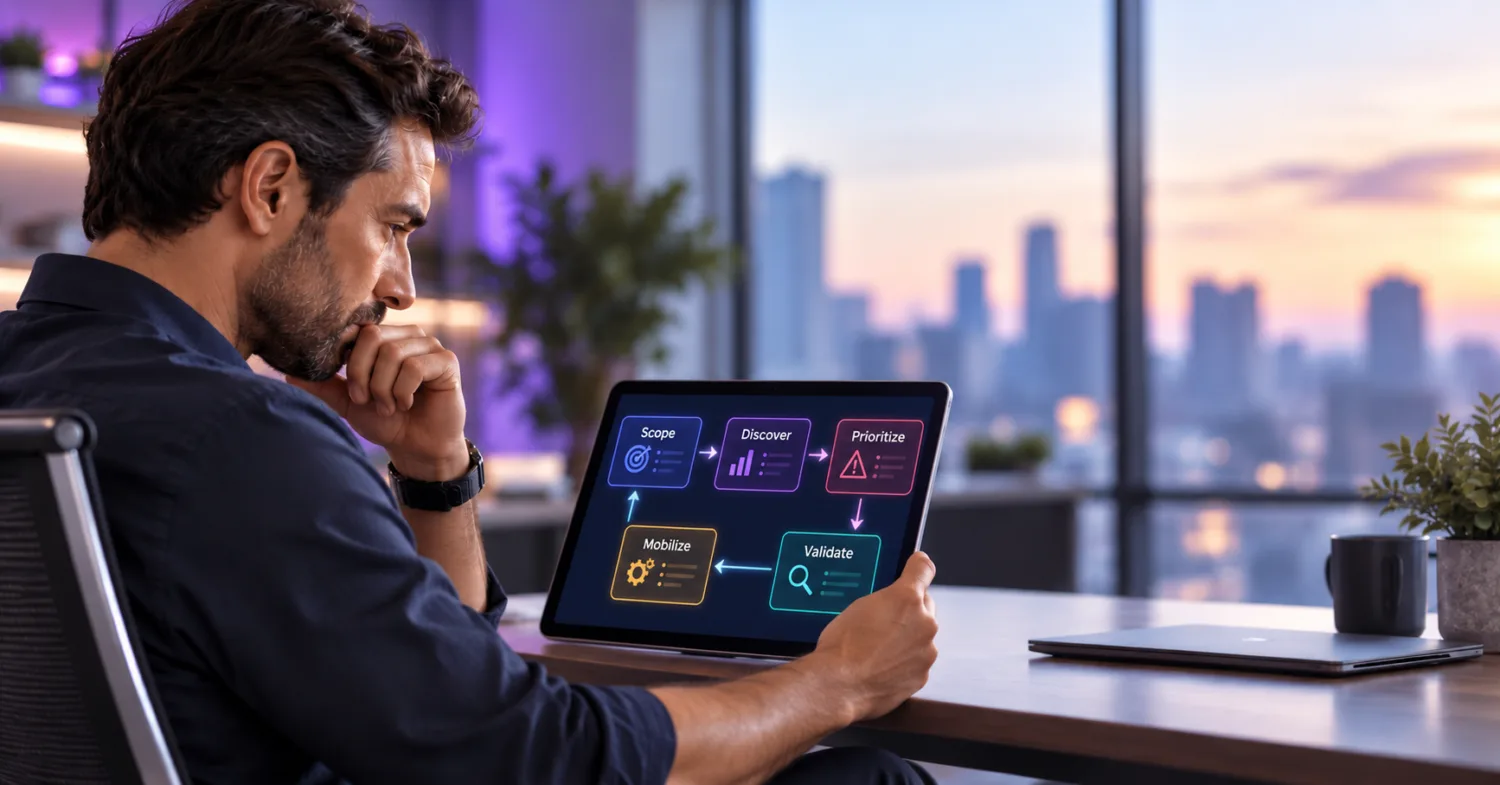
The loop closes in a specific order. Context from the Context Risk Graph frames the decision connecting the finding to its asset, owner, business service, and threat intelligence before a ticket is ever created. That shared context is what makes exposure management decisions defensible, not just fast. Tickets and workflows in systems such as Jira and ServiceNow then route the decision to the correct owner, with enough information to act without a back-and-forth. SLAs and escalation keep it moving. Fix verification then confirms that the exposure window actually shrank, and not just because a ticket closed, but the underlying exposure is now gone.
Results from mobilization feed back into scoping, so each cycle improves the next one. That feedback loop is what separates a continuous exposure management program from a recurring scan-and-triage exercise.
Across ArmorCode customers, aggregate results include a 75% average MTTR reduction, a 60% backlog reduction, and a greater than 3X first-year ROI.
Where to Start: A Practical Path for Security Leaders
The CTEM operating model your team is already running is the right starting point, so it doesn’t need to be rebuilt from scratch. All it likely needs is a clear-eyed look at where findings lose context, stall in triage, or sit unowned before remediation begins.
Find Where Findings Stall Before Remediation
Run a simple diagnostic. Trace a recent high-priority finding from discovery to verified fix, and note where it waited, who touched it, and how many times it was reassigned. The answer usually shows which part of the exposure window is longest, and that tells you where to focus first.
Customers typically begin where pressure is highest, whether that is application security posture, risk-based vulnerability management, software supply chain security, or AI exposure management, and then expand on the same control plane. The CTEM program stays the same. Only the starting point changes.
Questions to Ask of Any CTEM Platform
When you evaluate a platform, or your own current setup, these questions separate a working operating model from another set of queues: Does it work across the tools we already own, and stay neutral if we change them?, Does it frame decisions with business and attacker context, not just severity?, Does it drive action in our existing ticketing and DevOps workflows?, Can it prove that exposure was reduced?, and Is it governed, permissioned, and auditable, with humans in control?
The goal isn’t a faster scanner or a longer backlog. It’s a program where every attacker-relevant exposure has a clear owner, a defensible decision, and a verified outcome and where the time between discovery and resolution is shrinking in a way you can demonstrate to leadership and auditors. That’s what a mature CTEM operating model has to deliver when AI-augmented discovery is accelerating the front end of the pipeline.
Conclusion: CTEM Succeeds When Exposure Is Reduced and Verified
Discovery will keep accelerating, so the advantage goes to programs that can decide and act at the same pace. CTEM does not end at prioritization. It closes the loop from context to decision to remediation to validation, and it ends when exposure is reduced and verified.
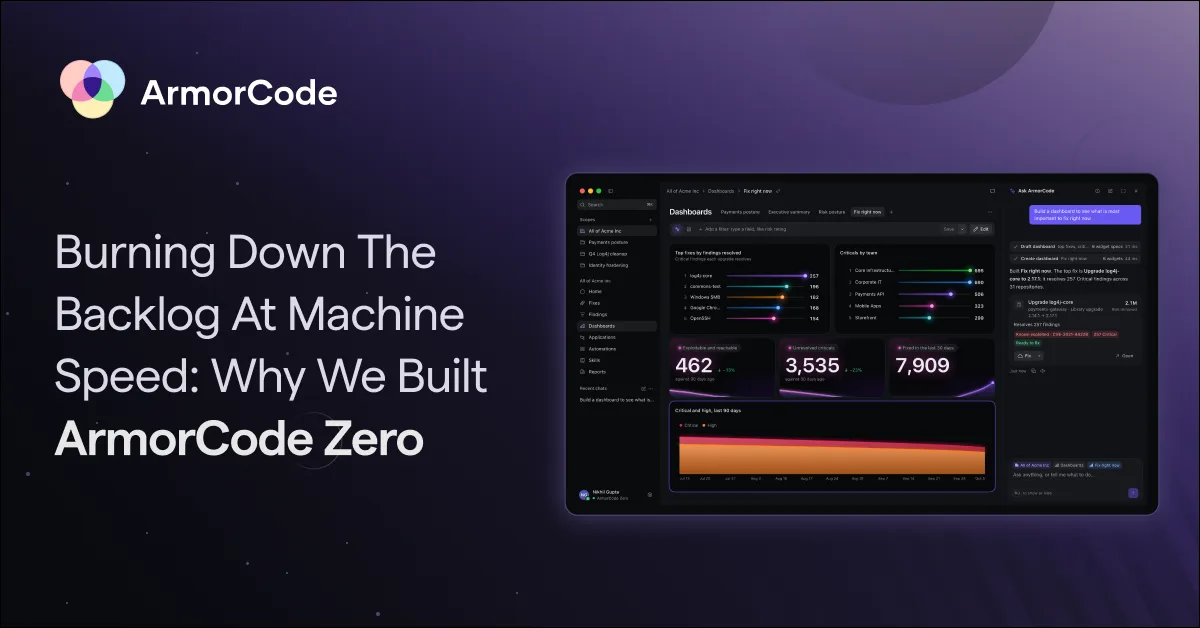
That loop is what ArmorCode Zero is built to work through. Zero is a new AI-native experience built on the ArmorCode platform and the Context Risk Graph. It reads every finding, groups findings into the fixes that remove the most risk, and drafts the change for review. A fix only counts when ArmorCode rescans the exact commit, and your team approves every change. Zero is now in limited availability to select customers.
If you want to see how an independent control plane works across the tools you already own, request a demo or take a tour. For the full five-stage model, read our guide to continuous threat exposure management.
Key Takeaways
- AI-augmented vulnerability discovery is accelerating the front end of the CTEM pipeline faster than manual triage and remediation processes can absorb, widening exposure windows rather than closing them.
- The bottleneck in exposure management has shifted downstream to reconciliation, ownership resolution, and the last mile between detection and verified fix.
- Severity-based prioritization doesn’t reflect real business risk. Effective exposure management requires context: asset criticality, reachability, exploitability, and business service impact.
- Time-based metrics like exposure window duration, SLA adherence by owner, and time to remediate prioritized findings reveal where programs are actually stalling and whether the gap is closing.
- ArmorCode’s Context Risk Graph provides the shared decision context that turns a ranked backlog into a defensible, auditable action: remediate, mitigate, validate, or accept.
- Anya Agents extend that context into action, handling the high-friction steps in the CTEM loop from triage, to research, remediation guidance, routing, and verification all at the speed AI-scale discovery now demands.