
Gartner: Unified Exposure Management Will Displace Fragmented Point Solutions
Your AI agents are multiplying. Your security program can’t see them.
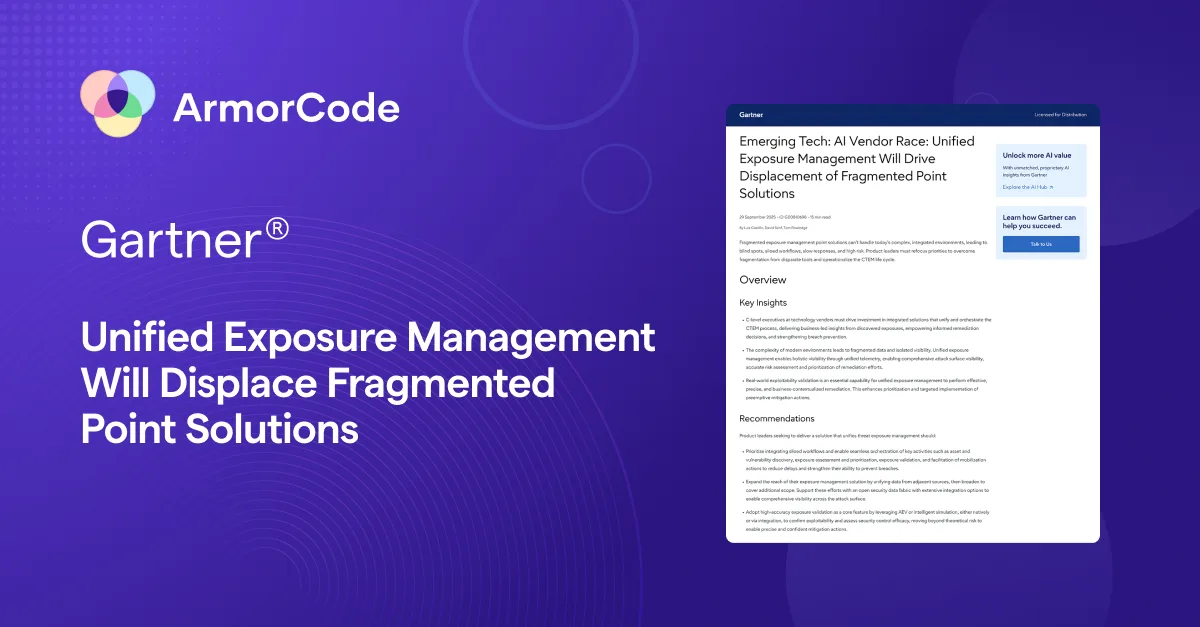
Gartner® predicts “60% of the exposure management market – up from less than 5% in 2025 – driven by the need to consolidate fragmented security data and unify siloed exposure management processes.”
What you’ll learn:
This Gartner research report unpacks the shift every security and product leader needs to understand:
- The Market Shift – By 2028, unified exposure management platforms will jump from under 5 percent of the market to 60 percent. We feel trend is already visible: major vendors are acquiring specialized capabilities to unify their platforms instead of bolting on more point tools.
- What Unification Means – Gartner defines unified exposure management as orchestrating the full CTEM life cycle (continuous threat exposure management) in one platform: discovery, assessment, validation, and mobilization in one workflow, not fragmented silos.
- The Three Core Imperative – Gartner discusses three imperatives for product leaders building in this space: integrate siloed workflows and enable seamless orchestration across the entire CTEM life cycle, unify security data from diverse sources through an open security data fabric and extensive integration options, and adopt high-accuracy exposure validation as a core feature to confirm exploitability and enable precise mitigation.
- AI’s Role – AI and AI agents can orchestrate and accelerate the identification, assessment, prioritization, validation, and response to exposures at machine speed, with humans overseeing complex fixes.
Why this matters:
Fragmented exposure management point solutions cannot handle today’s complex, integrated environments. The result is blind spots, siloed workflows, slow responses, and high risk.
Attack surfaces are growing faster than any team can manage. CVE submissions grew over 260 percent between 2020 and 2025. Median time-to-exploit collapsed from years to hours. Vulnerability exploitation is now the leading entry vector into breaches, ahead of credentials and phishing. Teams that cannot unify their exposure data and automate their response workflows risk falling behind competitors who can.
How ArmorCode aligns with this shift:
In our opinion, the unification Gartner describes is the same direction ArmorCode has built toward. Here’s how we feel the platform lines up:
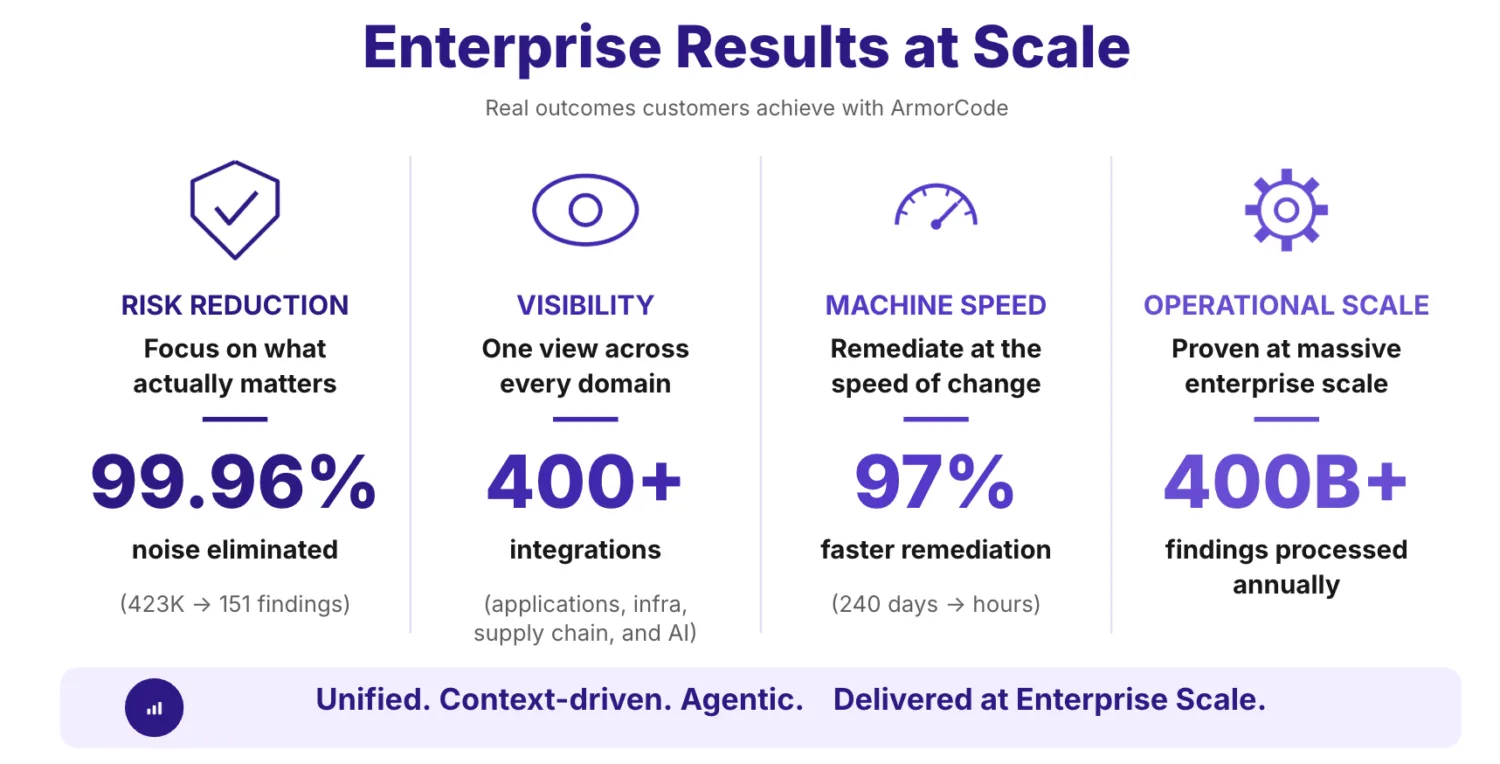
One Agentic Control Plane: ArmorCode unifies AppSec, cloud, infrastructure, supply chain, and AI risk into a single system of action, spanning the full CTEM life cycle from discovery through mobilization.
Open by Design: 400+ native integrations, no walled garden, no vendor lock-in. An open, connected security data fabric is exactly the kind of foundation this market is moving toward.
Exploitability-First Validation: Vulnerability Insights and Attack Path Analysis cut through the noise to identify the roughly 3 percent of findings that drive 80 percent of real business risk, so validation happens before mitigation, not after.
AI at Machine Speed: Anya agents automate triage, scoring, and remediation at scale while remaining auditable and human-led, keeping people in control of the decisions that matter.
Get the report
Download the full report to learn how to implement UEM architectural strategies to your security stack
Source: Gartner, “Emerging Tech: AI Vendor Race: Unified Exposure Management Will Drive Displacement of Fragmented Point Solutions,” Luis Castillo, David Senf, Tom Powledge, 29 September 2025 (ID G00810698).
GARTNER is a registered trademark and service mark of Gartner, Inc. and/or its affiliates in the U.S. and internationally and is used herein with permission. All rights reserved. Gartner does not endorse any vendor, product, or service depicted in its research publications and does not advise technology users to select only those vendors with the highest ratings or other designation. Gartner research publications consist of the opinions of Gartner’s research organization and should not be construed as statements of fact. Gartner disclaims all warranties, expressed or implied, with respect to this research, including any warranties of merchantability or fitness for a particular purpose.