CTEM spans multiple vendors. Your control plane should too.


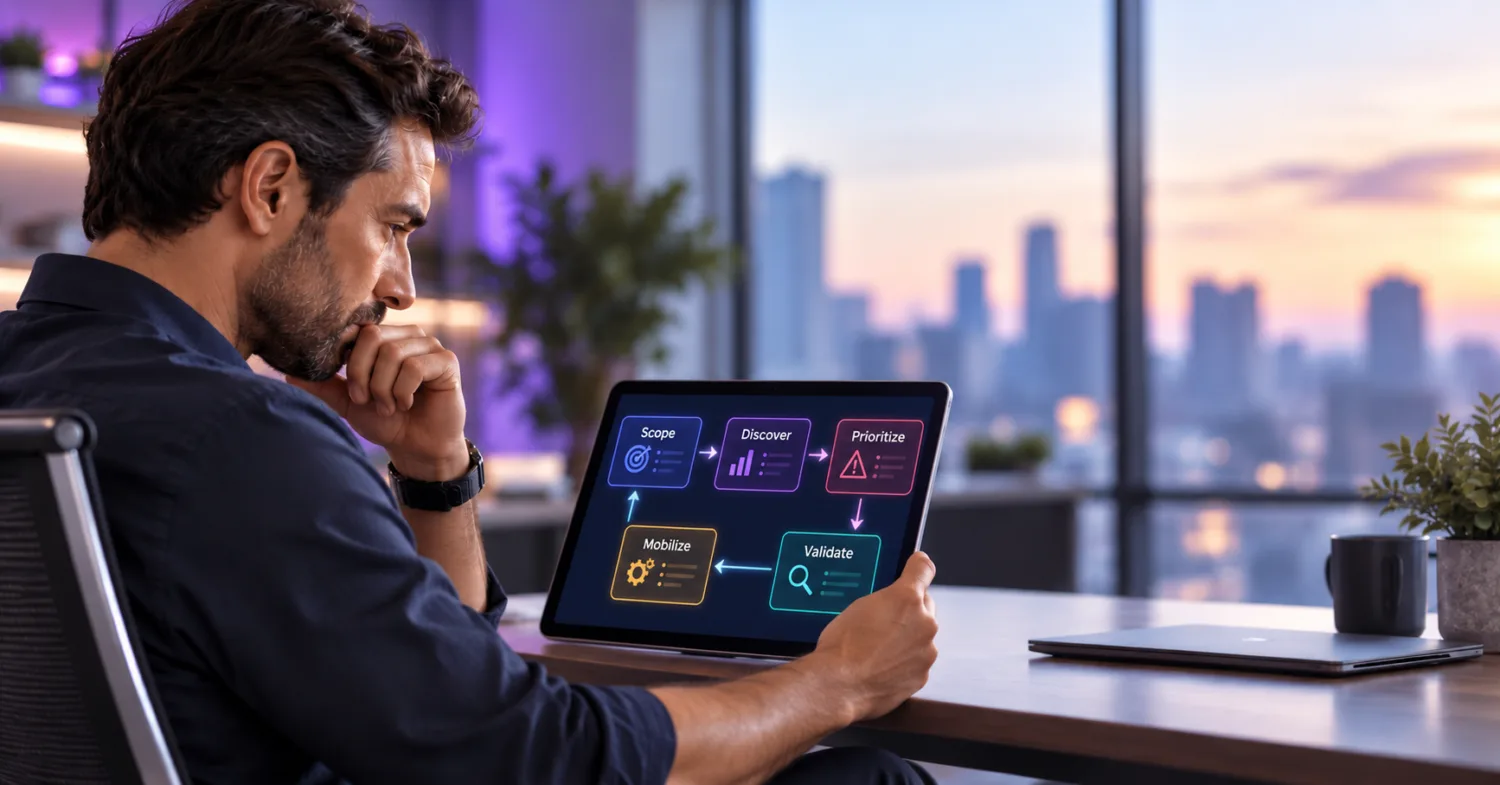
The CTEM framework gives security teams a continuous way to scope, discover, prioritize, validate, and mobilize against exposure. Continuous threat exposure management (CTEM) exists because periodic scanning cannot keep pace with attackers, and AI is now speeding up vulnerability discovery and the volume of findings that teams have to process. The harder problem sits underneath. Enterprises typically operationalize CTEM on top of many tools from many vendors, yet the signals often remain disconnected. This blog makes a simple argument: a CTEM program is multi-vendor by nature, so the platform that runs it has to be independent of every vendor it connects. That is what vendor-agnostic CTEM means in practice.
The CTEM Framework Draws on More Vendors Than Any Single Tool Can Cover
The CTEM framework is a continuous operating model, not a product, and no single vendor’s tool covers every stage of it. Every stage depends on data and workflows that come from different places. Application security testing, cloud posture, identity, threat intelligence, ticketing, DevOps pipelines, and validation tools each come from a different vendor, and most enterprises chose each one on its own merits. A CTEM program built on that reality needs a vendor-neutral platform that connects those tools and covers every stage across them, instead of one vendor’s view of the world.
Where Each Stage of the CTEM Framework Gets Its Data
Walk through the five stages of a multi-vendor CTEM program and the pattern is consistent. Scoping draws on asset inventories, code repositories, business service maps, and ownership records. Discovery draws on scanners and posture tools across applications, infrastructure, and cloud. Prioritization needs threat intelligence and reachability signals on top of the raw findings. Validation depends on pentest results and specialist validation tools that test whether an attack path is viable. Mobilization runs through ticketing and DevOps systems, where developers and IT teams do the work.
Each stage pulls from a different set of vendors. No stage lives inside one product. The program works only when the output of each stage reaches the next one with its context intact.
Why Tool Sprawl Is a Design Fact, Not a Failure
The common reaction to this picture is to consolidate everything onto one vendor. That reaction misreads how the tools got there. Teams picked specialized tools for good reasons, and the domains they cover—applications, infrastructure, software supply chain, cloud, and AI—evolve at different speeds. New categories keep appearing, and AI is the latest example. A stack that spans several vendors is the normal result of a security program that has kept up with its environment. Vendor-agnostic CTEM starts from that reality rather than fighting it.
The real problem is disconnected context. Each tool knows something true about your exposure, and none of them knows how that knowledge fits with the rest.
What Breaks When Your CTEM Program Is Locked Into One Vendor
A control plane owned by a scanner vendor tends to see its own scanner data most completely and to treat everything else as a second tier. For a CTEM program that has to correlate findings from many sources, that bias shows up in prioritization and in what gets mobilized first. Independence is a property of the architecture, and it determines whether the program stays neutral as tools change.
Native Data vs. Third-Party Data
Vendor platforms typically treat their own telemetry as the primary source and third-party data as an add-on that needs extra mapping work. That is a reasonable product decision for a vendor, and it is a poor fit for a program whose job is to compare exposure across every source. When findings from a tool the platform does not own arrive with less context, the program ranks them lower, or ranks them with less confidence, for reasons that have nothing to do with attacker risk. Our eBook, How to Outpace AI-Scale Exposures with Unified Exposure Management, covers this point in more depth. A control plane with no scanners of its own has nothing to favor.
The Cost of Rebuilding the CTEM Program Every Time a Tool Changes
Scanner contracts change. Teams adopt new tools. New risk categories appear. If the CTEM operating model is tied to one vendor’s platform, each of those events forces a rebuild of workflows, ownership mappings, and reporting. The program then spends its effort on migration instead of on reducing exposure. A control plane that is independent of any single vendor removes that constraint, allowing customers to keep the tools they have and change them without rebuilding the program.
Why Another Scanner Queue Won’t Fix the CTEM Framework
When each tool keeps its own queue, teams reconcile duplicate findings by hand, argue about severity across tools, and send developers tickets that lack context. That’s the cost of running a multi-vendor CTEM program without a shared model underneath it. The CTEM framework doesn’t end at ranking a list. It needs one model of exposure that holds across tools and gives visibility into all of them. That sets a new requirement for the program: time-based, decision-driven, continuous exposure reduction across many tools and many teams.
From Severity Ranking to Decision Framing
Technical severity describes a flaw. Attacker-relevant risk describes what that flaw means in your environment: whether it is reachable, whether it is being exploited, and what business service sits behind it. Many programs still lean on the first, and that gap is precisely where vendor-agnostic CTEM creates an advantage, because a control plane with no scanner of its own has no incentive to weigh technical severity over attacker-relevant signals.In Gartner’s September 2026 research, only 48% of surveyed organizations prioritized exposures using the likelihood of active exploitation and the impact to business-critical assets, and the remaining 52% still relied primarily on technical severity such as CVSS. That is a survey result, and the report describes the population and its limits. It does show where the market is moving, and Gartner’s guidance maps closely to the architecture described in this post.
Source: Gartner, Modernize Exposure Management to Counter AI-Augmented Vulnerability Discovery, 24 September 2026, ID G00855566.
Why a Backlog Is Not a Decision
A ranked backlog is still a list. A defensible decision is different: remediate, mitigate, validate, or accept, with an owner and a deadline attached. Making that shift also changes what you measure. Instead of counting open vulnerabilities, a time-based baseline measures how long attacker-relevant exposure persists. That number tells you whether the program is working.
The goal is not more findings. The goal is fewer exploitable exposures.
How ArmorCode’s Unified Exposure Management Platform Operationalizes CTEM
CTEM describes the operating model. ArmorCode’s Unified Exposure Management (UEM) platform is how that model runs in practice. Delivered through one independent Agentic Control Plane, it sits above the security stack that customers already own. It aggregates and normalizes signals from existing tools, correlates them with business and technical context, frames the right decision, drives action through existing workflows, and measures whether exposure went down.
ArmorCode does not compete with the stages of the CTEM framework. It is the control plane across them, and UEM is the architecture that makes the framework operational across applications, infrastructure, software supply chain, cloud, and AI.
Aggregate, Normalize, and Correlate Across 425+ Tools
Aggregation sounds simple until you do it. The same flaw shows up in several scanners under different names, tied to different asset identifiers, with different severity scores. Normalization and deduplication turn those into one finding. Mapping that finding to an asset and an owner makes it actionable. Keeping each stage’s output intact means the next stage starts with context instead of a bare record.
ArmorCode connects with 425+ security and development tools, so prioritization is scanner-agnostic, CTEM stays vendor-agnostic, and there is no rip-and-replace requirement. Customers keep the scanners they trust. ArmorCode does not replace them.
The Context Risk Graph: A Graph, Not Another Queue
The Context Risk Graph connects findings, assets, identities, ownership, business services, threat intelligence, reachability, and exploitability into one model of exposure. That model supports the decision a CTEM program actually has to make: what to remediate, what to mitigate, what to validate, and what to accept. A queue can only tell you what arrived. A graph can tell you how it relates to everything else you know. CTEM needs a graph, not another queue.
Point Tools, Platform Consolidators, and Control Planes
Three approaches show up in the market, and they solve different problems. Point tools solve one domain well and leave the stitching to the customer. Platform consolidators ask the customer to move onto one vendor’s stack, which works when the customer is willing to accept the lock-in described above. A control plane connects the tools the customer already trusts and adds the shared context and workflows on top. Each approach has a place. Only the control plane is built for a program that spans many vendors and expects the mix to change.
What ASPM Shows About an Effective CTEM Program
CTEM and ASPM belong together. Application security posture management (ASPM) is part of a modern CTEM program, and it is a useful case in point for what an effective program looks like. Applications and the software supply chain around them are a large source of the exposure the CTEM framework is meant to reduce. The application layer is also where ownership, reachability, and developer workflows decide whether a finding gets fixed. ArmorCode customers often start with ASPM because that is where pressure is highest, then extend the same platform across the rest of the CTEM framework.
The CTEM Framework in Practice: One Application Exposure, Start to Finish
Here is an illustrative scenario, not a customer story. A vulnerable open-source library turns up in a customer-facing application.
In scoping, the team identifies the application, its code repositories, the business service it supports, and its owner. In discovery, several application security testing tools report findings for that library, and the platform aggregates and deduplicates them into one. In prioritization, reachability and exploitability analysis shows whether the vulnerable code can be reached and exploited in this environment, so the team can tell whether it matters here. In validation, reachability, threat intelligence, and pentest findings confirm whether the attack path is viable. In mobilization, the fix is routed to the right developer through Jira or a DevOps workflow with an SLA, and the fix is verified once it ships.
Application security does not cover all of that on its own. Scanners and specialist validation tools supply some of the inputs, which is the multi-vendor point again.
What the Example Shows About an Effective CTEM Program
An effective CTEM program takes inputs from many vendors, holds one shared model of the exposure, routes it to a named owner with a deadline, and verifies the result. The same pattern repeats for infrastructure, cloud, software supply chain, and AI exposure, which connect to the same business services and owners as the application. ASPM is a solution domain and a common starting point. CTEM is the program.
Four Solutions, One UEM Platform: Running the CTEM Framework End-to-End
ArmorCode delivers four solutions in service of the UEM platform: ASPM, RBVM, SSCS, and AIEM. Each is a starting point and a solution domain. They share one control plane, one Context Risk Graph, and one set of agents and workflows, so customers can begin where they need help the most and expand without starting a new program.
How ASPM, RBVM, SSCS, and AIEM Support Each Part of the CTEM Framework
| Solution | What it covers | CTEM need it serves |
| ASPM (application security posture management) | Application exposure and developer-facing remediation | Bringing application findings, ownership, and fixes into the same exposure model as everything else |
| RBVM (risk-based vulnerability management) | Infrastructure and vulnerability exposure | Prioritizing by attacker-relevant risk instead of technical severity |
| SSCS (software supply chain security) | The components and pipelines that build software | Seeing and acting on exposure introduced before software ships |
| AIEM (AI exposure management) | Inventory and governance of AI-related exposure | Scoping and governing a new exposure category as it appears |
Start Where Pressure Is Highest, Expand on the Same Platform
A customer’s CTEM starting point can be application security, vulnerability prioritization, supply chain risk, AI governance, validation, or workflow depth. No starting point forces a rip-and-replace, and every one runs on the same independent control plane. When the next area becomes urgent, you add it to the platform you already run.
Agents Act on the Graph
AI is increasing the speed of discovery and the volume of findings, which moves the bottleneck downstream into triage, coordination, remediation, and verification. Anya Agents act on the shared context in the graph to correlate, triage, remediate, validate, route, and report. They work alongside custom and partner agents, and they stay human-led, policy-governed, permissioned, and auditable.
AI-Scale Discovery Requires AI-Scale Action
If AI helps find more exposure faster, response has to scale to match, or the backlog only grows. A control plane that spans vendors is also the right place to govern agents, because agents need consistent context and consistent permissions across every tool they touch. Anya Agents are workers that act on shared context, not a chatbot, and people stay in control of what they are allowed to do. We covered the downstream bottleneck in more detail in our earlier post on the AI bottleneck in CTEM.
Closing the Loop from Decision to Verified Fix
The mobilization end of the loop is where many CTEM programs stall. Closing it means automated ticket creation in systems such as Jira and ServiceNow, routing to the right owner, SLAs, escalation, and fix verification. The loop closes only when the right owner takes the right action and the organization can prove exposure was reduced. Decision Trail and SLA tracking provide that record, which supports governance and measurement.
How to Evaluate a Platform Against the CTEM Framework
If you are comparing platforms, these questions are worth testing in a trial, whether or not ArmorCode is on your list.
Questions to Ask Any Vendor
- Does the platform require its own scanner as a prerequisite?
- How does it treat data from tools it does not own?
- Can you swap a scanner without rebuilding workflows and reporting?
- Does it cover application security as part of the CTEM program?
- How does it calculate reachability and exploitability?
- How does remediation reach the system where developers already work?
- How are agent actions permissioned, logged, and reviewed?
I’d ask the vendor to demonstrate the answers, not describe them.
Where Specialist Validation Tools Fit
ArmorCode correlates reachability, threat intelligence, pentest findings, and validation evidence, and it integrates specialist validation tools where active testing is required. It does not replace every validation technique, and it should not. That is the multi-vendor point once more: validation is another place where the right tool comes from outside the control plane.
Proof That the Model Works
The model depends on connection, scale in production, and measurable outcomes, so those are the three places to look.
Scale and Outcomes
A multi-vendor CTEM program generates findings at a scale that manual triage cannot absorb. ArmorCode connects with 425+ security and development tools, ensuring the control plane remains vendor-agnostic as the stack evolves and teams avoid rebuilding workflows each time a tool changes. Because the platform sits above the security stack rather than competing with it, customers keep the scanners they trust while gaining the shared context that makes the CTEM framework operational across applications, infrastructure, software supply chain, cloud, and AI. Across ArmorCode customers, 10K+ agents are deployed and have taken 22M+ actions in production, and the platform processes 400B+ findings annually. In the aggregate, ArmorCode’s August 2026 product announcement reported a 75% average reduction in MTTR, a 60% reduction in backlog, and 3X+ first-year ROI across customers.
Next Steps
If your CTEM framework is stalling between findings and fixes, start with where context gets lost. Read the CTEM use case page and the CTEM checklist, or talk with us about where your program is stuck.
CTEM spans multiple vendors. Your control plane should too.