Closing the Loop from Exposure to Remediation: ArmorCode and OpenAI Daybreak Defense Factory
ArmorCode and OpenAI now connect continuous threat exposure management (CTEM) to AI vulnerability remediation. Prioritized application security findings flow from ArmorCode into OpenAI Daybreak Defense Factory for validation and fixes, and findings the Defense Factory discovers in code flow back into ArmorCode.
AI is changing how quickly vulnerabilities can be found, validated, and fixed. The next challenge is running that speed at enterprise scale, across every scanner, agent, and team, while knowing which work matters most. That takes reliable data, deep context, and agents you can govern.
Data plane: every finding, enterprise grade
ArmorCode ingests findings from 425+ integrations across application, infrastructure, and cloud and AI security, and processes more than 400 billion findings a year. Our approach is deliberately heterogeneous. We plug into the scanners, code pipelines, and remediation tools an organization already runs, rather than asking them to standardize on one.
Context Risk Graph: what actually matters
Raw findings become decisions in the Context Risk Graph. The core platform correlates and deduplicates across tools, then connects each finding to exploitability, threat intelligence, asset and business criticality, and ownership. This is how a long list becomes a short, defensible priority order.
Agentic control plane: Anya acts, with governance
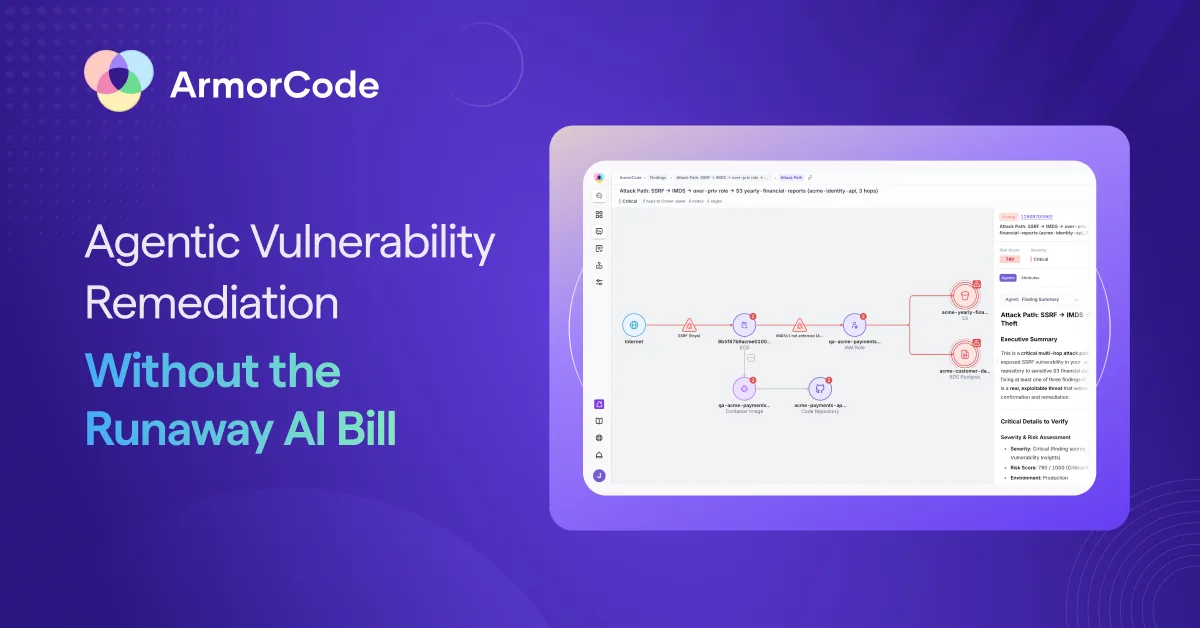
Triage happens in the platform, so remediation work starts from a prioritized, context-rich finding. That triage looks beyond individual findings. ArmorCode analyzes how vulnerabilities connect across applications and infrastructure, detecting and triaging chains where a code weakness, an exposed service, and an over-permissioned cloud role combine into a real path to impact. A finding that looks moderate on its own can be critical as part of a chain, and prioritization reflects that
Anya is ArmorCode’s agentic AI, a workforce of purpose-built agents that act on the context in the Context Risk Graph. For tightly scoped issues, such as SAST and SCA findings confined to a single file, Anya’s code fix agent opens pull requests directly in the developer’s workflow, under the policies and approvals the enterprise sets.
Where Daybreak Defense Factory fits
OpenAI Daybreak Defense Factory builds on Codex Security to help AppSec teams investigate vulnerabilities and prepare proposed fixes. It analyzes a codebase, builds a threat model, validates that a vulnerability is real, and proposes a root-cause patch for review. Teams can start with a repository scan or findings from supported security tools. Agents investigate the affected code and prepare proposed patches, with evidence for engineers to review and test.
This week we’ve introduced an integration so Daybreak Defense Factory can ingest prioritized application security findings from ArmorCode, and developers can manage those findings through validation and remediation inside Codex. Additionally, findings that the Defense Factory discovers in code can flow into ArmorCode, giving teams visibility into what its analysis uncovers.
One view across the enterprise
ArmorCode aggregates and prioritizes findings across 425+ integrations spanning application, infrastructure, and cloud, so the code findings a team works on reflect the organization’s full exposure, not just what one tool sees. When combined with Daybreak Defense Factory, these findings are correlated with everything else in Daybreak Defense Factory, deduplicated, scored in context, assessed for how they chain with infrastructure and cloud exposures, and tracked against SLAs.
ArmorCode remains the system of record for enterprise-wide deployment: one place where security leaders see risk and remediation progress across teams, tools, and agents.
Putting CTEM into practice
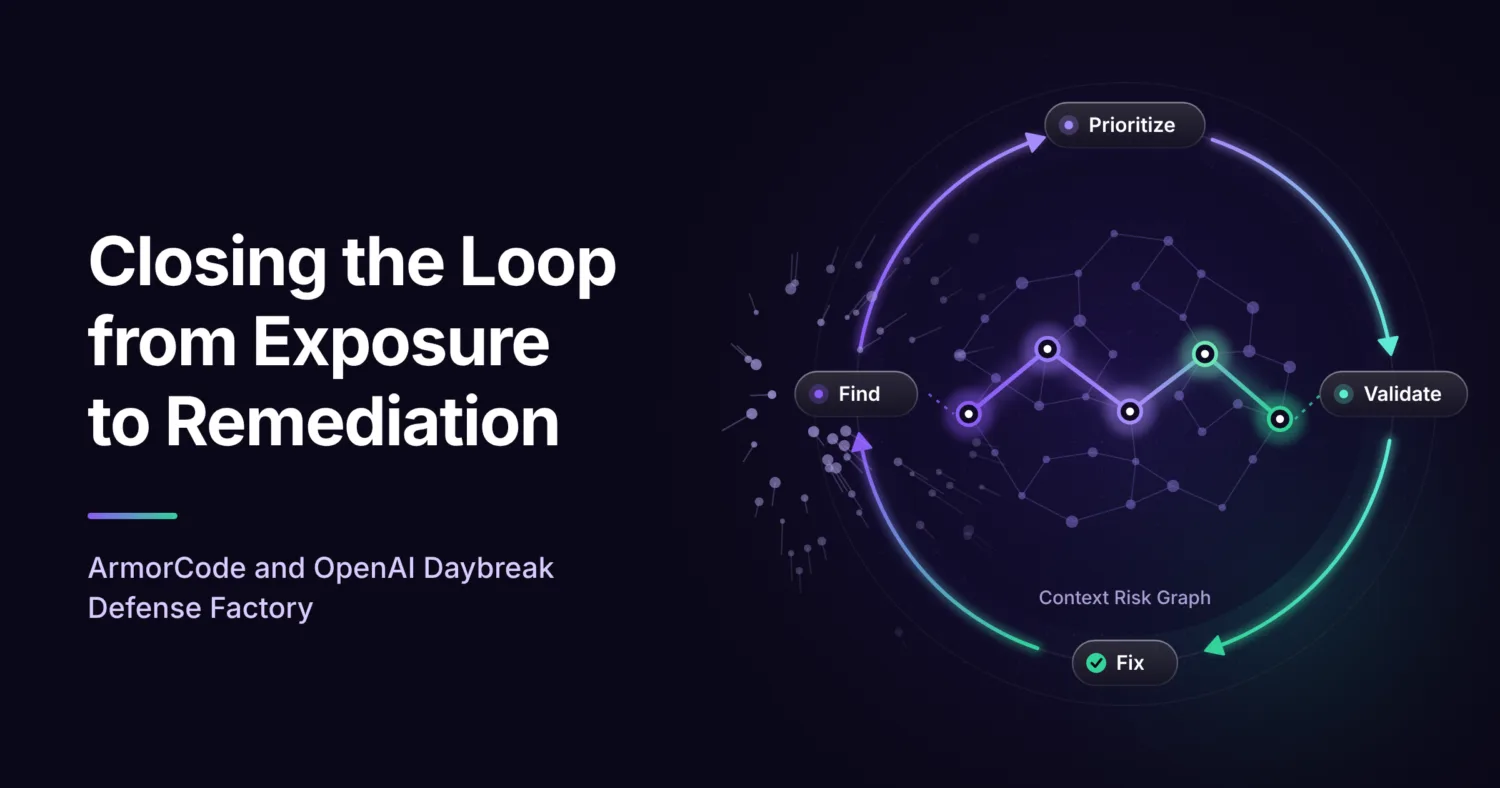
Continuous threat exposure management (CTEM) is an operating model that scopes, discovers, prioritizes, validates, and mobilizes against exposure. OpenAI describes the Defense Factory as a continuous operation to find, validate, and fix vulnerabilities, and the two fit together stage by stage:
- Scoping and discovery: ArmorCode ingests findings from every scanner, and Daybreak Defense Factory scans code for what those tools miss.
- Prioritization: the Context Risk Graph ranks findings by exploitability, business criticality, and how they chain into real attack paths.
- Validation: Daybreak Defense Factory confirms a vulnerability is real and proposes a root-cause patch for review.
- Mobilization: Anya opens pull requests, and ArmorCode tracks ownership, SLAs, and the audit trail.
What changes for each team
- Developers work from prioritized findings, with fixes arriving as pull requests from Anya or validated patches with Daybreak Defense Factory, in the tools they already use.
- Security teams retain enterprise-wide prioritization and remediation tracking in ArmorCode.
- Security leaders get proof of risk reduced, with audit trail and SLA performance attached.
Discovery and remediation are both getting faster. ArmorCode’s context and governance, paired with Daybreak Defense Factory’s code-level validation and fixes, is how organizations run that speed at enterprise scale. If you’d like to run your highest-risk code findings through the continuous defense loop, reach out to your ArmorCode account team.
Key takeaways
- ArmorCode and OpenAI Daybreak Defense Factory are now integrated. Prioritized application security findings flow from ArmorCode into the Defense Factory, and findings the Defense Factory discovers in code flow back into ArmorCode.
- Context decides what gets fixed first. The Context Risk Graph correlates and deduplicates findings across 425+ integrations, then ranks them by exploitability, threat intelligence, business criticality, and ownership, including how findings chain into real paths to impact.
- Two paths to a fix. Anya’s code fix agent opens pull requests for tightly scoped issues, and Daybreak Defense Factory validates vulnerabilities and proposes root-cause patches for engineers to review.
- Governance stays in place. Fixes arrive under the policies and approvals the enterprise sets, and ArmorCode remains the system of record for risk, SLAs, and remediation progress across teams, tools, and agents.
- Each team gets what it needs. Developers work from prioritized findings, security teams keep enterprise-wide prioritization, and security leaders get proof of risk reduced, with an audit trail attached.