Continuous Threat Exposure Management
Operationalize CTEM at enterprise scale
Connect every scanner, add business context, and drive governed exposure reduction through one independent control plane.
A CTEM program gives security teams the operating model for continuously reducing exposure at enterprise scale. ArmorCode provides the independent Agentic Control Plane to run that program across the tools you already own.
Attacker timelines are compressing. Exposure processes are not.
CTEM moved security from periodic vulnerability management to a continuous operating model, and AI is now raising discovery speed and finding volume. Uncovering more findings is no longer the hard part. To operationalize CTEM, teams have to connect what their tools know, decide what is real business risk, and act before the attacker’s window closes.
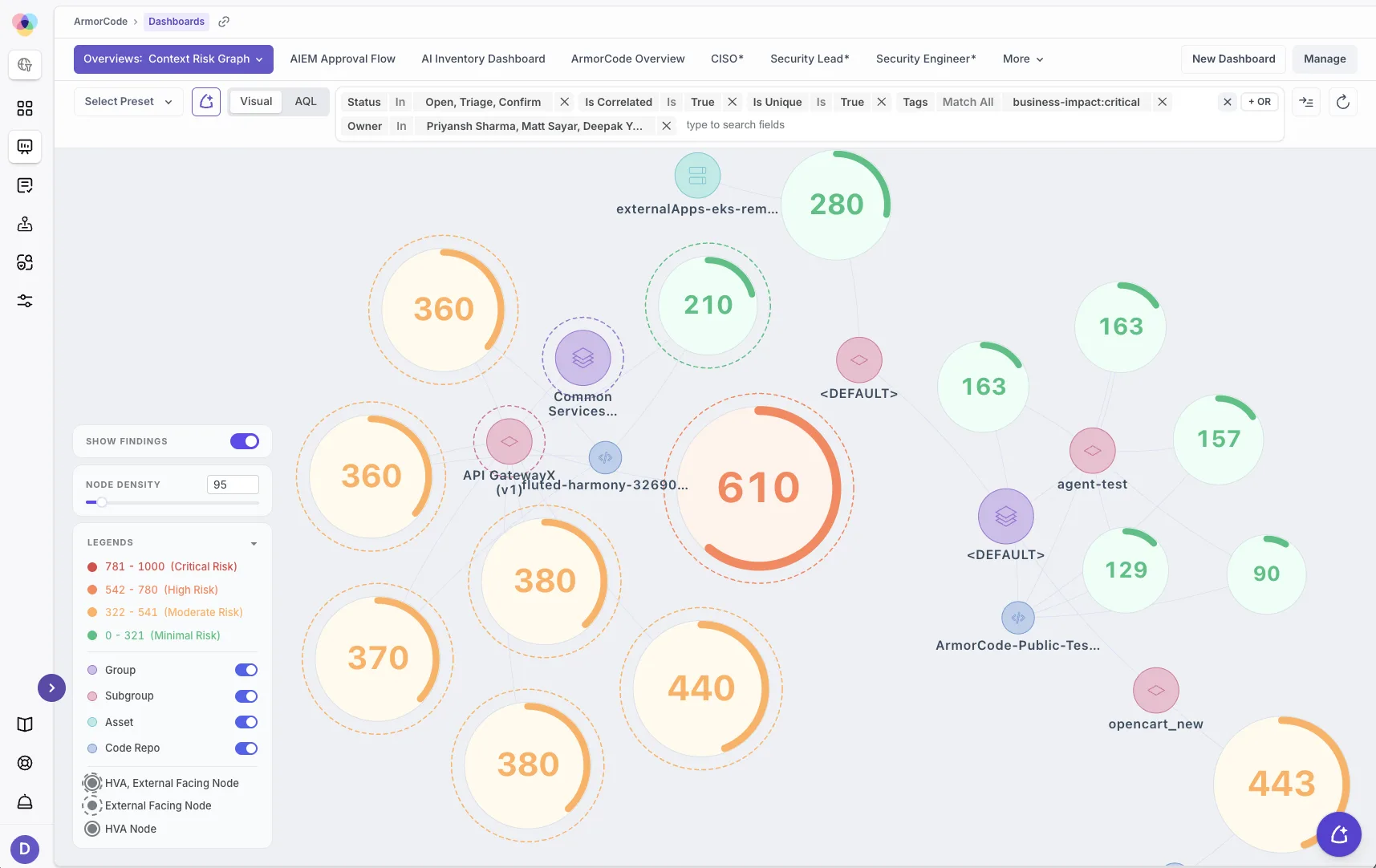
Severity still drives the queue. Technical severity ranks work, but it does not say what is reachable, exploited, or tied to a critical service.
Tools hold the evidence, but nothing connects it. Findings lose business context as they move between scanners and queues.
Action stalls between teams. Unclear ownership sends tickets back and forth before anyone fixes anything.
No one can show exposure went down. Open vulnerability counts say little about how long attacker-relevant exposure persists.
The adoption and volume of vibe coding
of surveyed organizations prioritize exposures using likelihood of active exploitation and impact to business-critical assets
still rely primarily on technical severity such as CVSS
use GenAI assistance or workflow automation in vulnerability workflows
use GenAI agents to prioritize exposures
Gartner, Modernize Exposure Management to Counter AI-Augmented Vulnerability Discovery, 24 September 2026, ID G00855566. Survey population and limitations are described in the report.
CTEM spans multiple vendors. Your control plane should too.
CTEM now has to be time-based, decision-driven, and continuous across many tools and teams. Gartner’s guidance on exposure management maps closely to ArmorCode’s architecture: an independent control plane above the security stack you already own, not another scanner beside it.
Keep the scanners you trust
ArmorCode is vendor neutral, connecting with 400+ tools and delivering scanner-agnostic prioritization with no rip and replace, plus the freedom to change tools without rebuilding the operating model.
Decide on context, not severity
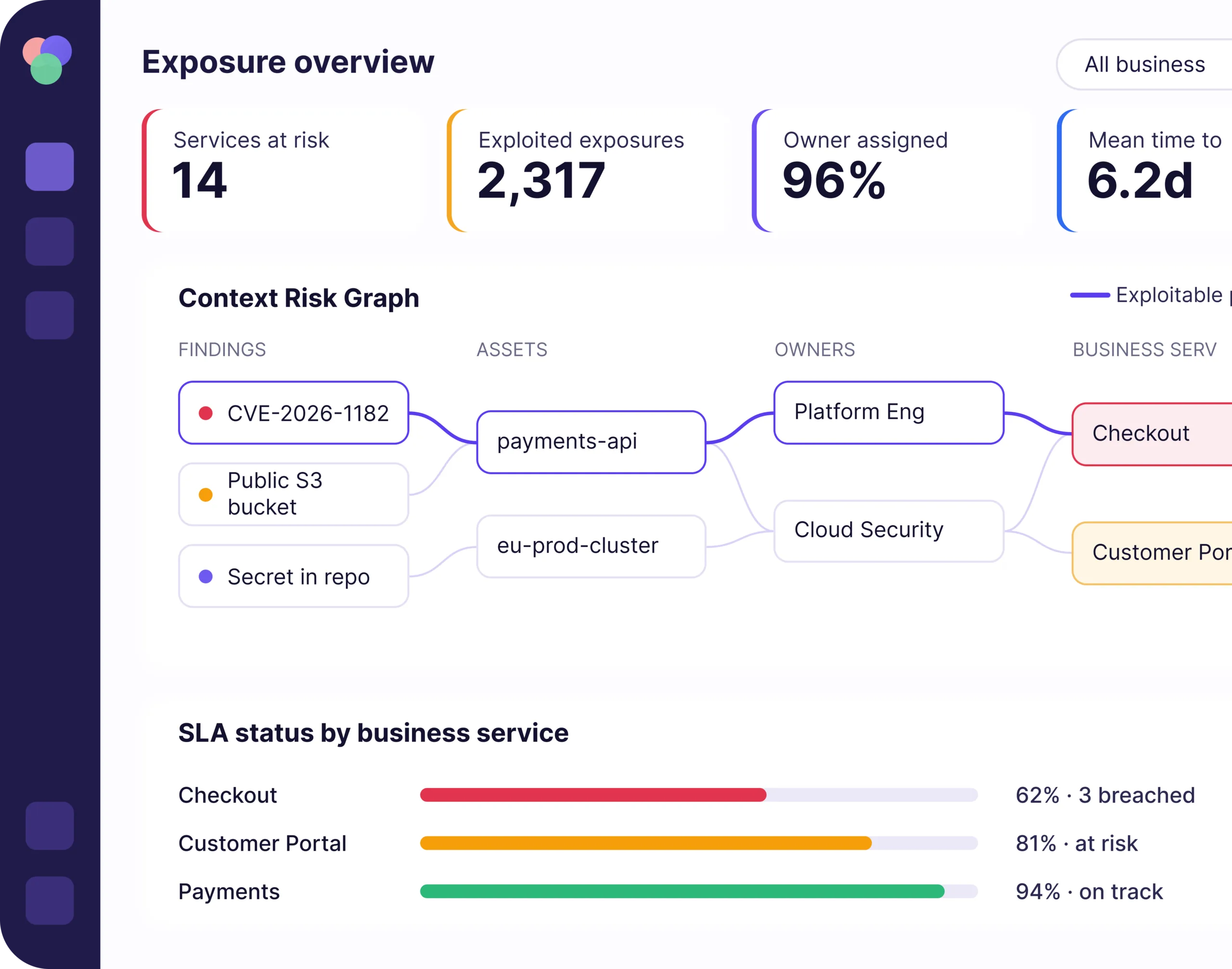
The Context Risk Graph connects findings to assets, identities, ownership, business services, threat intelligence, reachability, and exploitability, so teams can choose to remediate, mitigate, validate, or accept.
Close the loop with governed action
Owners, SLAs, and workflows in Jira, ServiceNow, and DevOps tools carry each decision through to verified remediation, with human oversight and an audit trail.
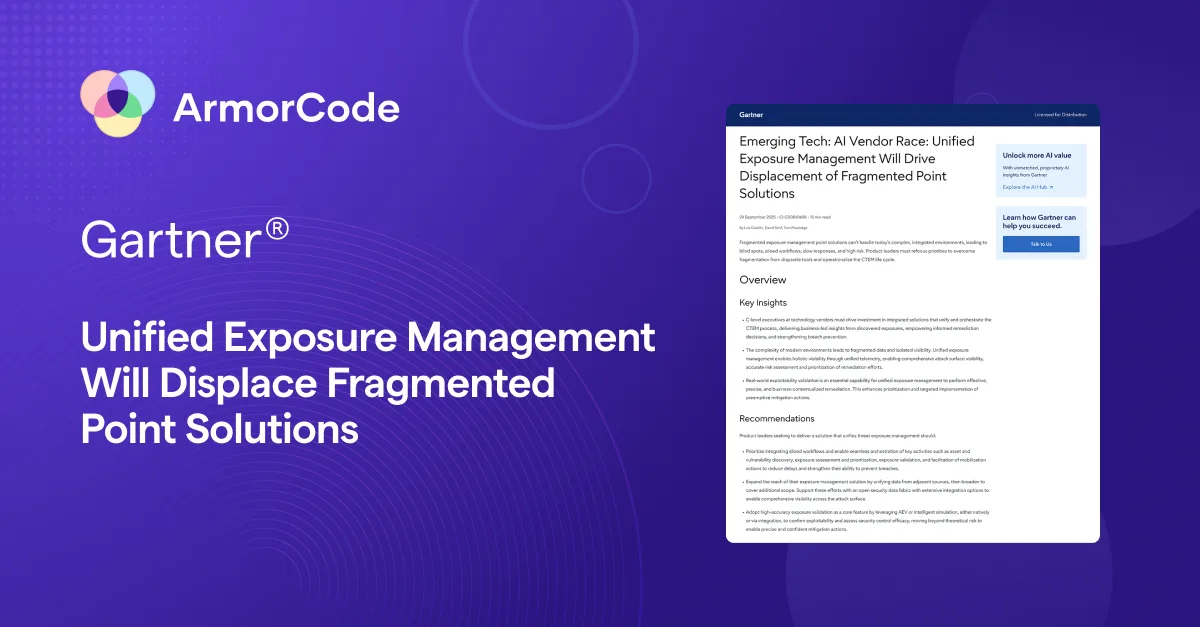
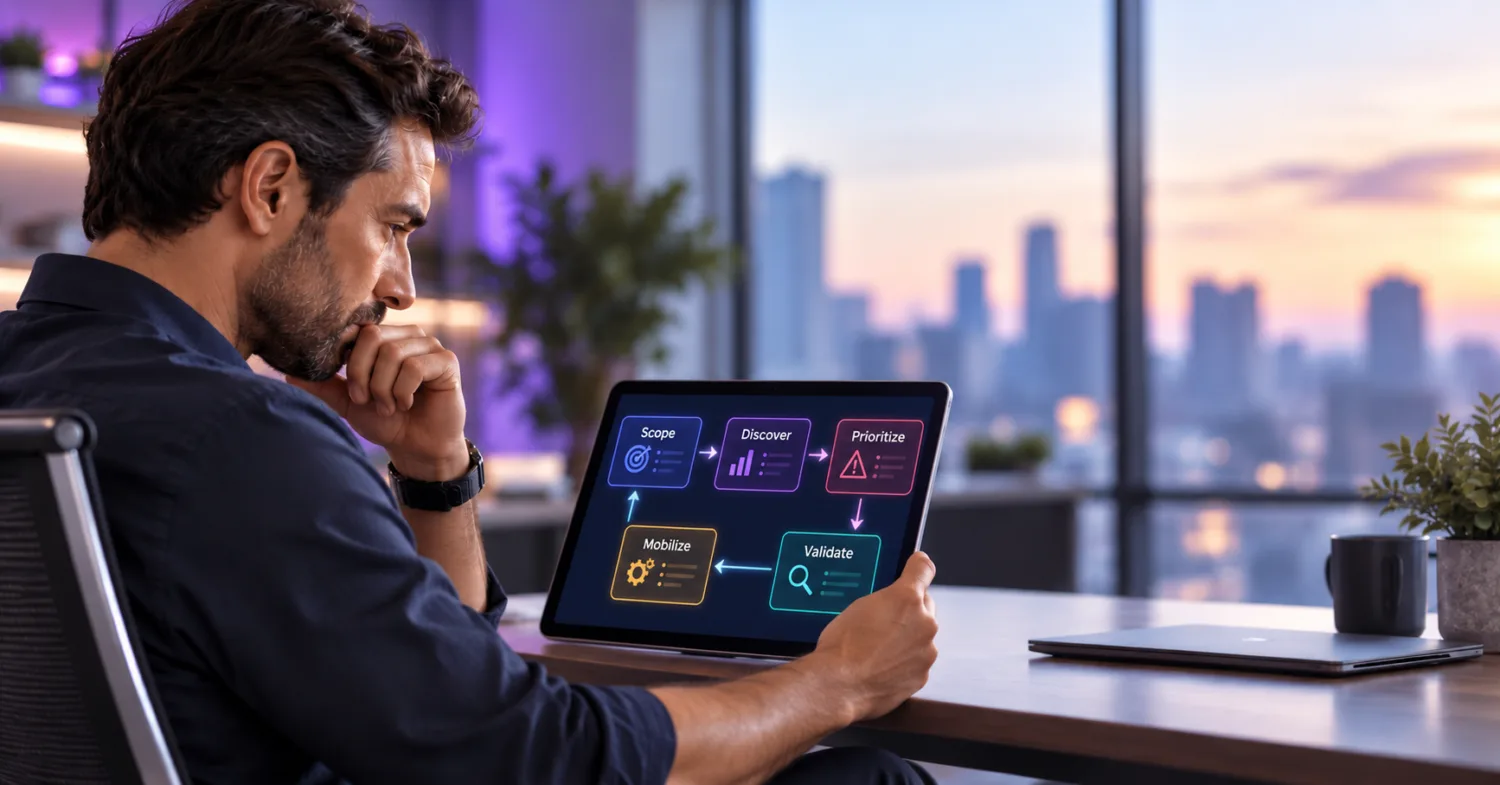
The Five Stages of CTEM
From CTEM framework to working program
ArmorCode does not compete with the stages. It is the control plane across them, so each stage hands the next one its context intact.
Scoping: Align exposure to the business, not just the scanner.
Define what matters and who owns it with hierarchies, business services, applications, assets, AI inventory, and ownership.
Discovery: One exposure view across the tools you already own.
See the whole exposure surface. 400+ integrations normalize, deduplicate, and correlate findings across application, infrastructure, software supply chain, cloud, and AI.
Prioritization: Move from severity ranking to decision framing.
Focus on attacker-relevant risk using the Context Risk Graph, reachability, exploitability, criticality, ownership, business impact, and ArmorCode Advanced Threat Intelligence (AATI).
Validation: Validate the path, not just the score.
Prove which exposure paths are viable with reachability, threat intelligence, pentest findings, attack-path context, and connected specialist validation tools.
Mobilization: Turn context into governed action and prove the result.
Get the right action to the right owner fast with Anya Agents, no-code workflows, ticketing, SLAs, escalation, mitigation, remediation, and verification.
Discovery and adversarial validation can come from the specialist tools you already trust. ArmorCode connects and correlates their signals so your CTEM program keeps moving forward.
The ArmorCode Agentic Control Plane: your system of action
ArmorCode is the independent Agentic Control Plane built to operationalize CTEM across applications, infrastructure, software supply chain, cloud, and AI, without asking teams to replace the tools they trust.
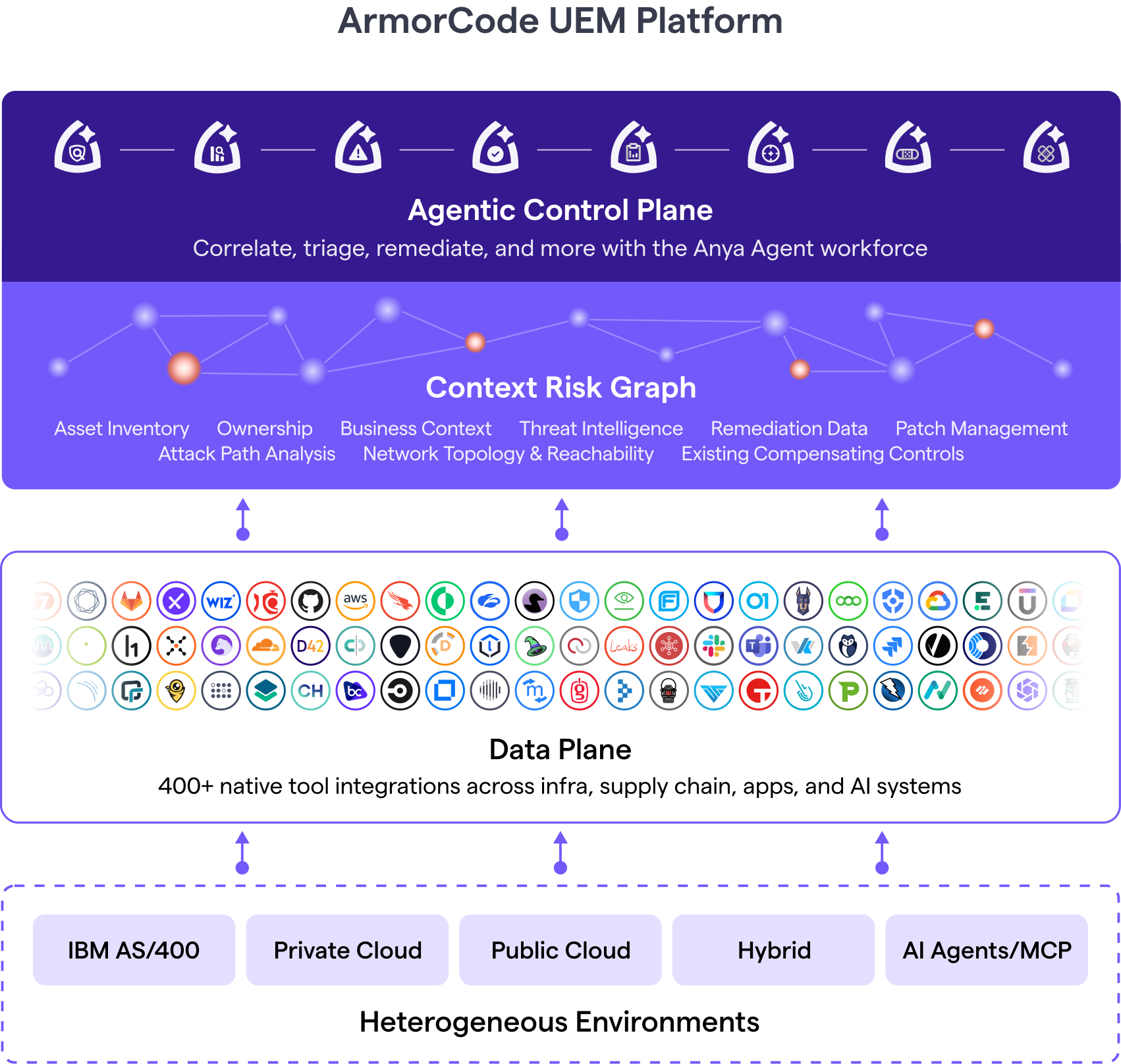
Unified ingestion from your existing tools
400+ integrations, with normalization, deduplication, and correlation, so every tool’s findings enter on equal footing.
Shared context in the Context Risk Graph
To operationalize CTEM at scale, you need a graph, not another queue. One dynamic model of enterprise exposure connects technical risk to the business, the owner, and the realistic attacker path.
A governed agentic workforce
Anya Agents correlate, triage, remediate, validate, route, and report, alongside custom and partner agents. Workflows are human-led, policy-governed, permissioned, and auditable. AI-scale discovery requires AI-scale action.
Exposure reduction you can measure
integrations
average reduction in mean time to remediate (MTTR)
backlog reduction
first-year ROI
MTTR, backlog, and ROI figures are aggregate customer value from the August 2026 product announcement.
Risk-Based Vulnerability Management
Start here when infrastructure and vulnerability queues need risk-based decisions across teams.
Application Security Posture Management
Start here when application security findings and developer-facing backlogs create the most pressure.
Software Supply Chain Security
Start here when software supply chain exposure needs the same ownership and SLAs as everything else.
AI Exposure Management
Start here when AI adoption is adding exposure you cannot yet inventory or govern.