The FBI’s ARTEX Warning Exposes a Gap in Cyber Defense

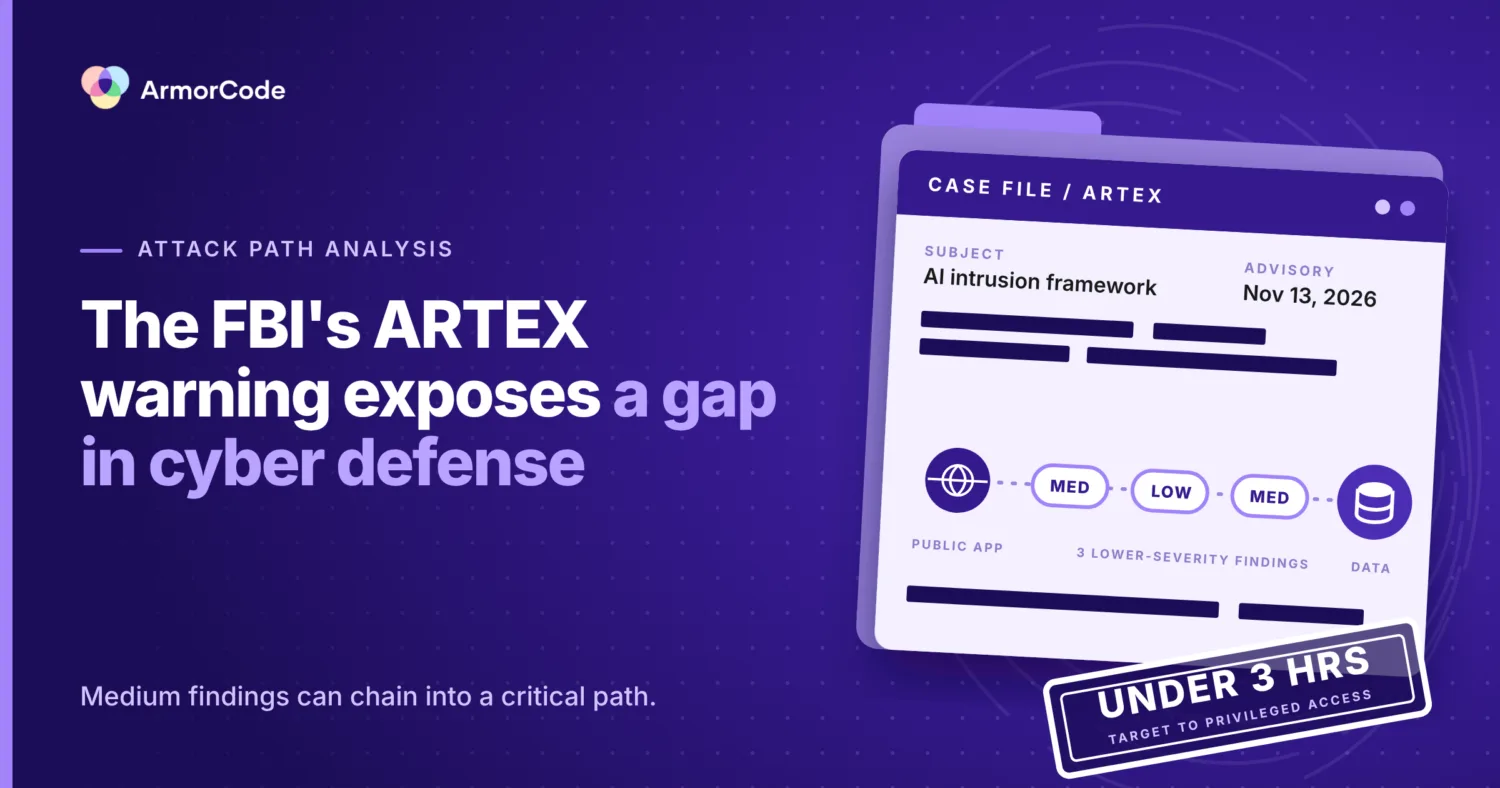
You’ve probably seen ARTEX in the headlines this week. An AI-powered tool built to test your defenses is now helping attackers move faster. So what is it, and what does it mean for your team? The scary part is that you might need to reconsider the vulnerabilities you already decided could wait for a fix.
ARTEX started as an open-source framework for authorized penetration testing. A developer using the handle Autumn-27 released it in July 2026 and took down the original repository in October after reports of misuse. Copies kept circulating, and the FBI identified a commercial version called ARTEX PRO. What really caught my attention in the FBI’s November 13 advisory was how quickly some of the intrusions progressed. Attackers went from initial targeting to privileged access in under three hours.
Key takeaways
- A critical attack path can form without a critical finding. Several lower-severity weaknesses can combine to expose a business-critical asset.
- Siloed scanners can each be right and still miss the risk. Each tool reports what it sees. The urgency becomes clear when teams connect the findings with reachability, permissions, and business impact.
- Unified Exposure Management (UEM) makes the path actionable. Teams can see where one fix may break several paths and route the work to the people who own it.
- Continuous Threat Exposure Management (CTEM) keeps priorities current. A deployment or permissions change can make a deferred finding urgent even when no new vulnerability has been disclosed.
How non-critical vulnerabilities combine into a critical attack path
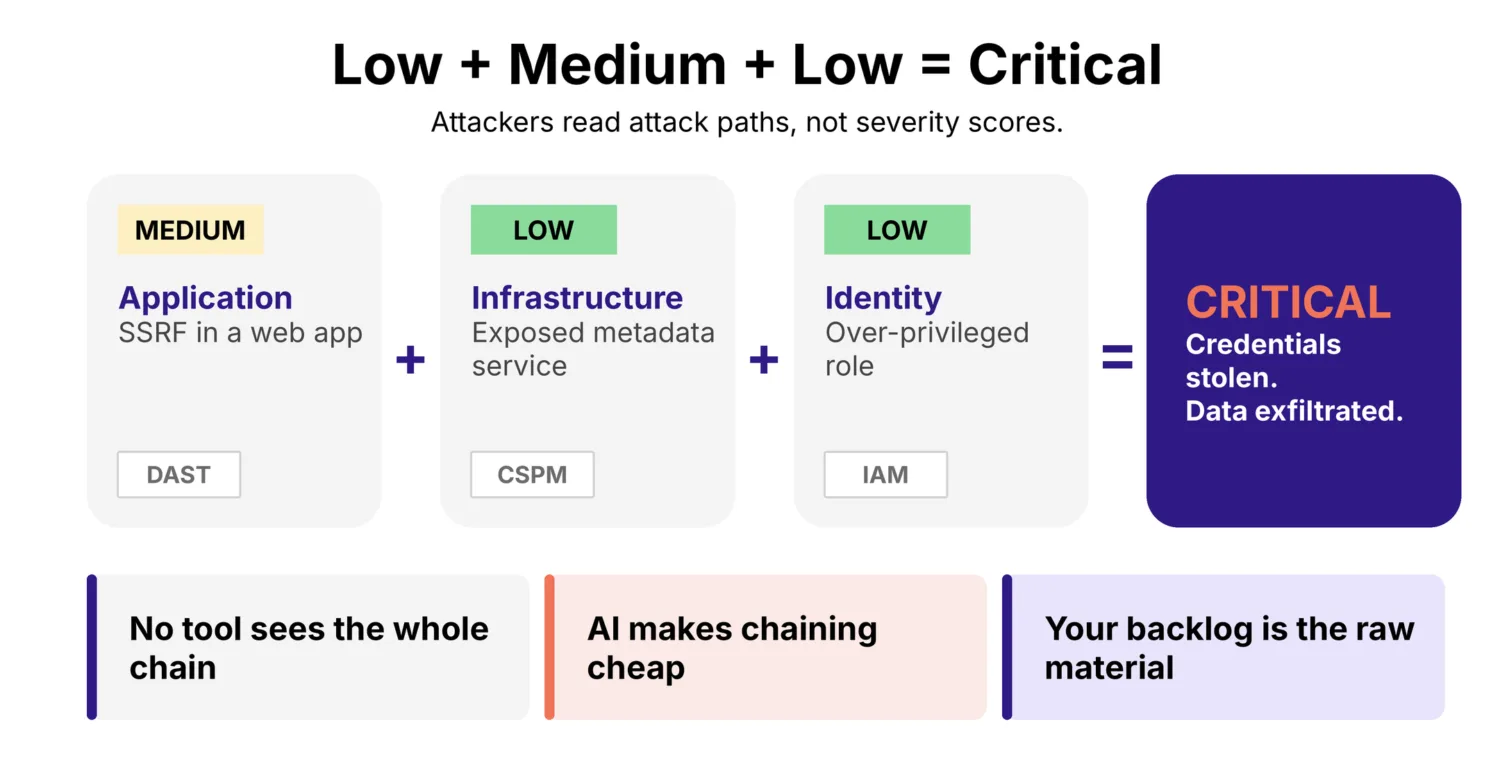
Think about your last vulnerability review. Your AppSec team might have scheduled a medium-severity patch for the next release. A permissive network rule might still be in the infrastructure backlog. An account with excessive permissions might be waiting on an identity review. Each decision can make sense on its own. But, would you make the same decisions if all three findings were tied to the same public-facing application?
Let’s say they are. Your application security team sees a vulnerable dependency, and a software bill of materials (SBOM) shows which applications contain it. Your infrastructure team can see what the affected deployment can reach. Your identity team can see what the workload has permission to access. Put those pieces together and you may find a route from a public-facing application to sensitive records. That’s how a critical exposure can be distributed across three different queues while nobody has enough visibility to see the connection.
The ARTEX story is a perfect example of why security teams are struggling to keep up. The good guys AND the bad guys are using AI to scale their operations. Attackers can evaluate exponentially more combinations in a fraction of time while your teams are still comparing notes. Bad actors can essentially use tools like ARTEX to brute force their way into uncovering exposure.
Your scanners can each be right but the combined exposure can still go unseen. Even if you put all those findings in one list, you still need to know what they make reachable together. That’s what attack path analysis gives you. The original severity score can stay the same while the finding moves to the top of your queue.
Why vulnerability chaining makes the case for UEM
This is where Unified Exposure Management can help you see the entire picture. At ArmorCode, we use the Context Risk Graph to connect findings and inventory from AppSec, infrastructure security, software supply chain security, SBOMs, and AI Exposure Management. That gives you the context to see how exposures connect across teams, what an attacker could reach, and who can make the change.
Remember the example of the overprivileged account? If it sits on several high-risk paths, tightening its permissions could break more than one path with a single change. If the dependency patch has to wait for the next release, you can verify whether the access change breaks the path in the meantime. With ArmorCode, you can route the work to the owner and give them an informed reason to move it up their queue.
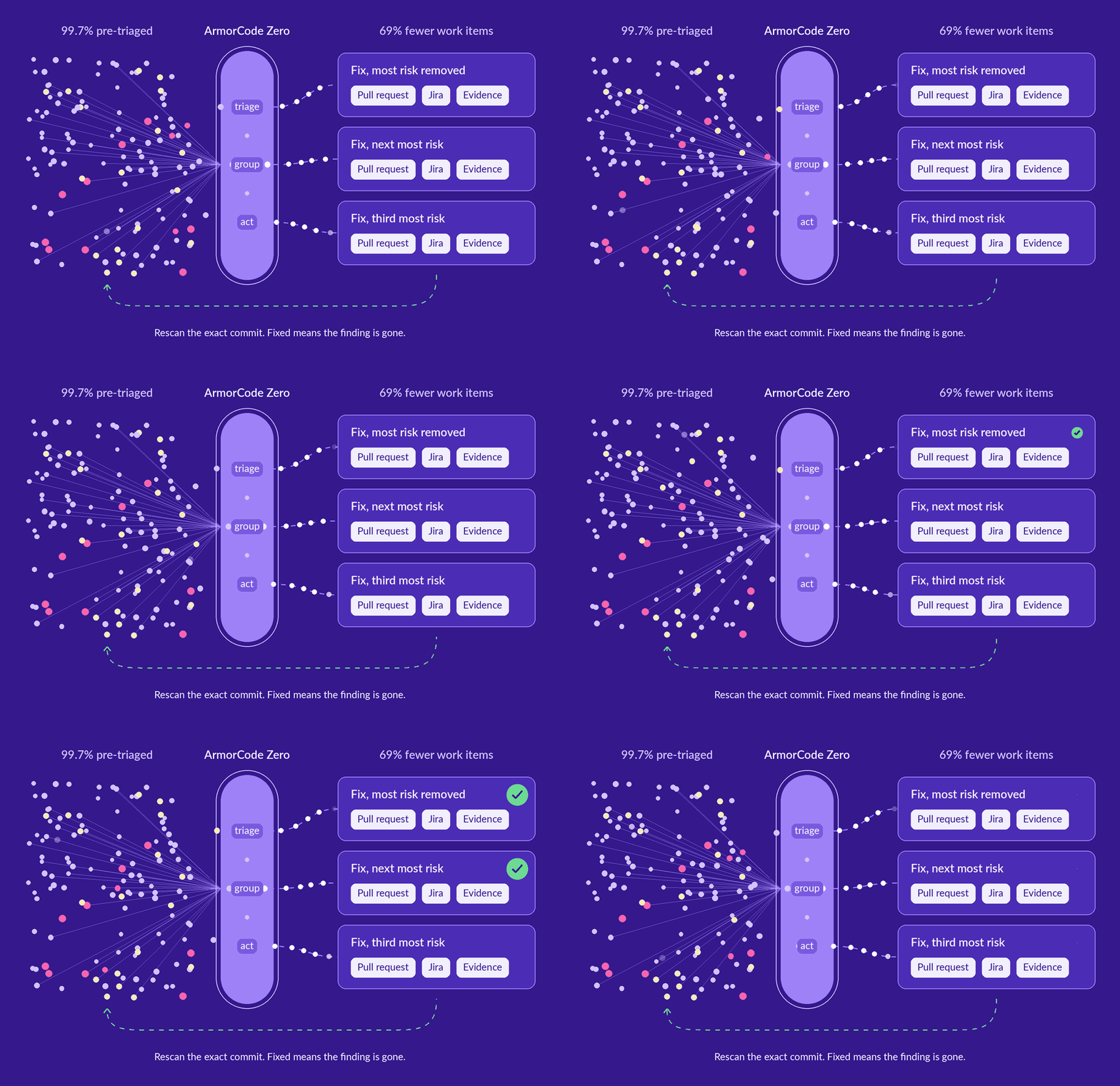
Once you know which fix will break an attack path, how quickly can you get it into an engineer’s hands? That’s why we built ArmorCode Zero, an AI-native workspace that uses the Context Risk Graph to triage findings at machine speed and rank fixes by the risk they remove. In CTEM, this is what mobilization looks like in practice. For a code fix, Zero can draft the change and open a pull request for your team to review and approve. After the fix lands, a rescan checks whether it resolved the finding. That takes you from knowing what to fix to having a change ready for review and evidence that it worked.
How attack path analysis supports CTEM
If you’re running a Continuous Threat Exposure Management (CTEM) program, attack path analysis helps with prioritization, validation, and mobilization. Use it to decide which exposures to address first, confirm which paths are viable, and get the work to the people who can fix them. That fits into the broader CTEM cycle of scoping, discovery, prioritization, validation, and mobilization.
ArmorCode allows you to operationalize CTEM, even as your environment changes. Think about what happens when a new deployment goes live or a third party gets more access. A finding you deferred last week can suddenly sit on a path to something critical. The next scan may show the same finding with the same score. Your priorities should change if the path changes, that’s why exposure management can’t be distributed across silo’d security tools.
Try this. Pick one critical asset at your next exposure review and ask which deferred findings could combine into a direct path to it. Then ask who could break that path today and how you’d verify the change worked. If it takes three teams and several days to answer, you’ve found where you need to improve before an intrusion forces the same conversation, post breach. That’s what you don’t want.
Prioritize the fix that breaks the attack path
ARTEX is an uncomfortable reminder that your backlog can understate your risk even when every finding is scored correctly. Unified Exposure Management gives you the context to see when several deferred findings add up to a critical exposure and decide which fix will break the path. The sooner you can make that call, the more time you have to act before an attacker tests the same combination.
The FBI’s ARTEX warning shows why vulnerability chaining matters. Check out the related resources below to learn how attack path analysis and UEM help defenders prioritize fixes across security silos.
Frequently asked questions
What is ARTEX?
ARTEX is an AI-powered framework originally released for authorized penetration testing. The FBI reported that attackers have used it to automate parts of intrusions, chain techniques faster, and run operations against multiple targets at once.
What is vulnerability chaining?
Vulnerability chaining combines several weaknesses to achieve an outcome that any one weakness would be unlikely to enable on its own. A chain can include software vulnerabilities, misconfigurations, and excessive permissions. Its risk depends on what the combination makes reachable.
What is attack path analysis?
Attack path analysis maps how weaknesses and access relationships can create a route to a sensitive asset. It helps teams use reachability, exploitability, and business impact to decide which exposures to address first.
How do SBOMs help identify attack paths?
An SBOM identifies the components an application contains. When teams combine that inventory with deployment, reachability, and asset context, they can see which applications with a vulnerable component sit on a path to sensitive systems or data.
How do UEM and CTEM work together?
CTEM gives teams a repeatable framework for assessing and reducing exposure. UEM connects findings, assets, and owners across security domains so teams can apply that framework to cross-domain attack paths an